





Resources
- Home
- Resources
- Fertility Resources
- A Comparison of Egg Donation in Taiwan and Across Asia | Regulations, Price, and Success Rates
A Comparison of Egg Donation in Taiwan and Across Asia | Regulations, Price, and Success Rates
Share
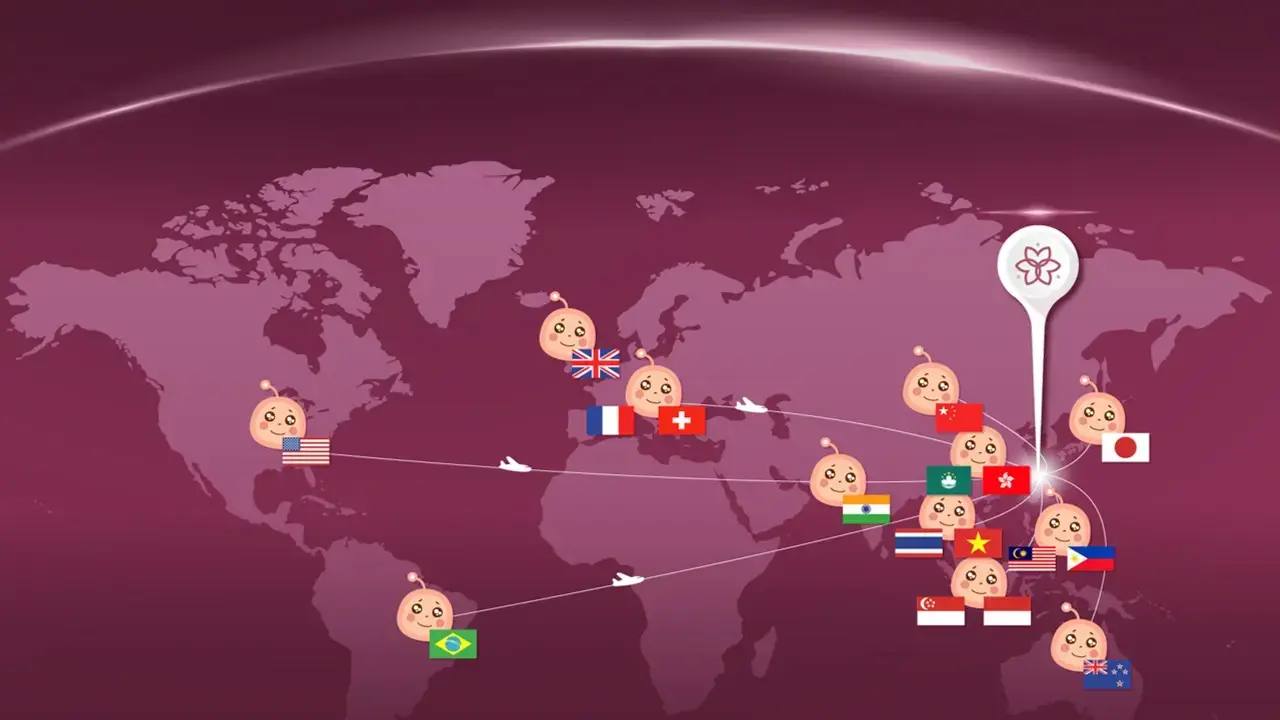
For couples who are facing challenges in fertility, egg donation can be a difficult decision, but it is often one of the most reliable options. In recent years, an increasing number of East Asian and Southeast Asian families have chosen to travel to Taiwan for egg donation—not only because Taiwan offers world-class IVF technology, but also due to its comprehensive legal protections, efficient matching services, the quality of the donor pool, and our heightened standard screenings.
However, many women still have numerous questions when searching for information about where to undergo an egg donation program in Asia, and often struggle to find reliable answers. This article will explain why many couples choose to come to Taiwan and will help you fully understand the egg donation process, matching system, and success rates, so you can make a confident and informed decision.
1. Current status of the egg donation program in Taiwan
One of the main factors is the natural decline in egg quality and quantity as women age. Although advances in medical technology and healthier lifestyles help many women maintain a youthful appearance, improving or restoring a woman’s ovarian reserve remains a significant challenge. Other reasons couples may consider egg donation include effects from chemotherapy, unexpected circumstances such as surgery, or unexplained infertility.
According to the American Society for Reproductive Medicine, the natural pregnancy success rate is around 30% at age 30, but it is known to drop sharply to about 5% after age 40. In addition to women of advanced maternal age, those with premature ovarian insufficiency or certain genetic conditions may also achieve pregnancy and childbirth through egg donation.
2. Laws and regulations regarding egg donation in Taiwan and other Asian regions
When a patient is looking for an egg donation treatment, most search results would primarily land in the United States, Thailand, and Taiwan. Of these, Taiwan and Thailand are the only countries in Asia with well-established legal regulations. However, Thailand requires the donor to be of the same nationality as the recipient, making it difficult for international patients to access donor treatment.
By contrast, some countries in the region, similar to Japan, have no clear laws regarding egg donation (Grey area). The situation there remains ambiguous, often described as “not illegal, but not really legal either,” with ongoing debates over medical and ethical concerns, the child’s right to know their origins, physiological concerns, and risks related to advanced maternal age.
Taiwan stands out as the country in the Asia region where the program is completely legal and state-run, with strict and clear management, ensuring that all procedures are conducted under government oversight and standardized guidelines. Taiwan is also one of the few countries across Asia that has an egg bank available for recipients. This combination of legal clarity, government oversight, and accessibility makes Taiwan a preferred destination for many couples seeking egg donation in Asia.
Patients can feel confident that treatment in Taiwan is provided directly at reproductive medical centers or infertility clinics approved by Taiwan’s Ministry of Health and Welfare. The legal framework for egg donation is clear, and the process is fully regulated, offering both medical safety and legal assurance for intended parents.
3. The Process of Egg Donation Programs in Taiwan
Treatment schedule: How long do I need to stay in Taiwan?
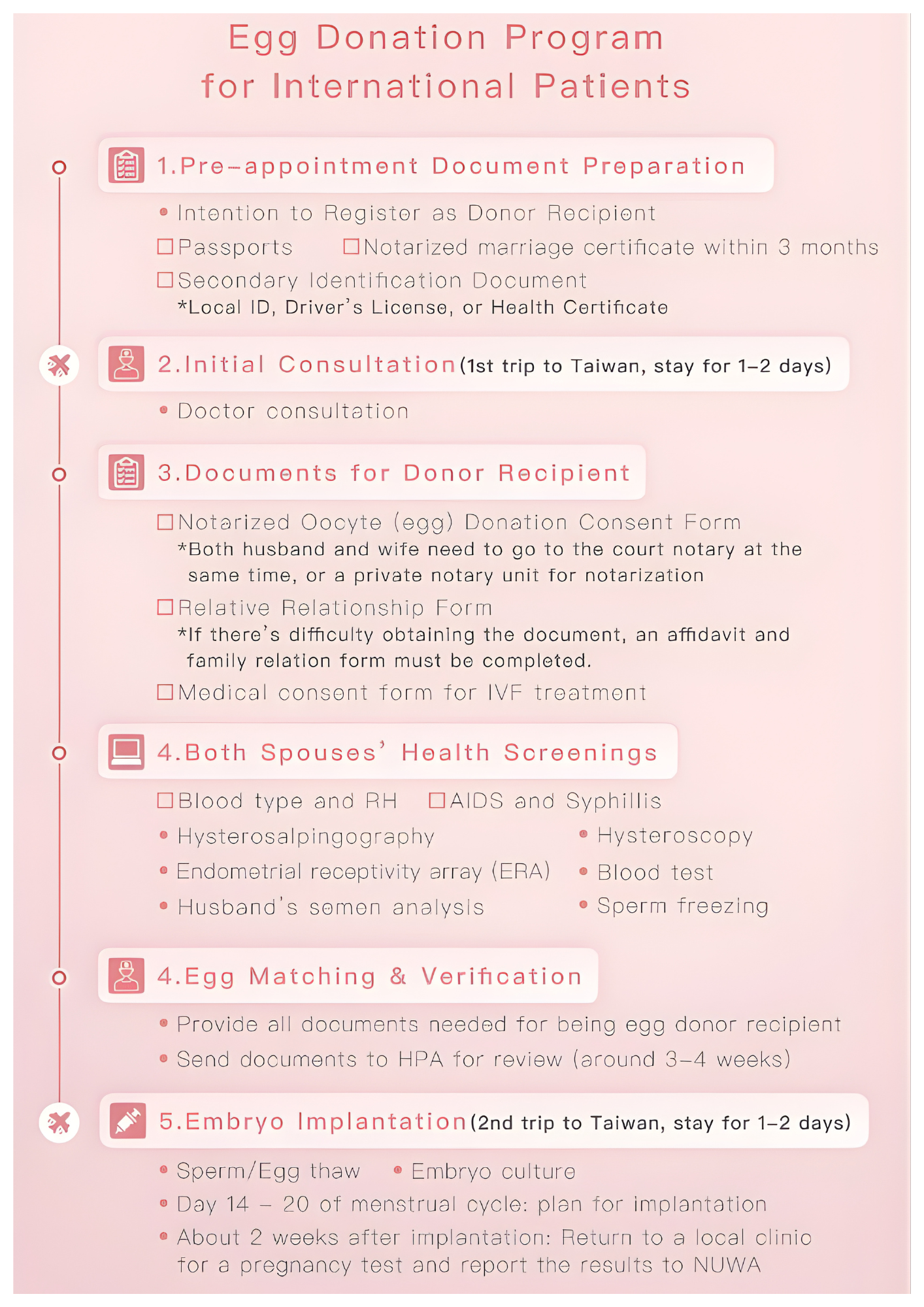
When considering IVF or an egg donation program overseas, many people feel overwhelmed by the idea and commitment of traveling abroad for medical reasons. We want to reassure you that completing the entire egg donation process in Taiwan only requires two visits. Each visit typically lasts just 2–3 days, making the treatment schedule manageable and convenient.
✅ Click here to learn more details about the whole egg donation treatment process at NUWA
4. Cost of egg donation in Taiwan compared to the US and other Asian countries
The United States is the most common destination for egg donation, with treatment costs ranging from approximately NT$1,310,000 – 1,813,000 (USD 41,800 – 57,900) on average. However, when factoring in accommodation, travel, and other living expenses, pursuing treatment in the US can become a very high-cost option, especially when couples are residing in Asian countries.
Thailand offers egg donation at a slightly lower cost than in the US, roughly NT$605,000 – 810,000 (USD 19,300 – 25,800) on average, but the egg donation program is limited to Thai nationals, making it less accessible for international patients.
Taiwan, on the other hand, provides the most cost-effective solution, with treatment priced even lower between NT$570,000 – 630,000 (USD 18,150 – 20,050) at NUWA Fertility Center, while still offering world-class reproductive technology that is second only to the US. This combination of affordable cost, egg bank availability, and advanced medical standards makes Taiwan an increasingly popular choice for couples seeking egg donation in Asia.
※Disclaimer: The prices listed above are estimates only and may fluctuate higher or lower depending on your personal condition, demands, and medication requirements. Price conversion may also fluctuate daily. Prices listed exclude transportation and accommodation.
✅ Click here to speak with one of our specialist consultants about the treatment price range and personalized treatment schedule for FREE.
5. Why Recipients from Around the World Choose Taiwan for Egg Donation
A. Reputation for High-Quality Medical Care
Taiwan is recognized for its exceptional healthcare system. In the 2020 Global Healthcare Index, Taiwan ranked first with a score of 86.71, ahead of South Korea and Japan. The country’s hospitals and clinics are known for their strict hygiene standards, highly trained medical staff, and patient-centered care. Additionally, many clinics offer multilingual support, making treatment accessible and comfortable for international patients.
B. Advanced Technology, Second Only to the USA
Taiwan excels in reproductive medicine, particularly in IVF. According to the “In Vitro Fertilization Country Implantation Rate Ranking” published by the Taiwanese Society for Reproductive Medicine, Taiwan ranks second globally with a 36.7% implantation rate, just slightly behind the United States at 37.5%. The country is also equipped with state-of-the-art laboratory facilities and the latest reproductive technologies, ensuring high success rates while providing advanced genetic testing options like PGT-A for embryo screening.
C. Strict Regulations and Government Involvement Ensure Procedural Safety
Egg donation and IVF in Taiwan are strictly regulated by the government under the Assisted Reproduction Act. Clinics operate under official oversight from the Ministry of Health and Welfare, ensuring that all procedures comply with legal and ethical standards. This regulatory framework includes rigorous donor screening, mandatory documentation, and secure handling of genetic materials, giving patients both legal protection and medical safety during the entire treatment process.
6. Advantages of NUWA Fertility Center
① Well-Equipped Facilities and Experienced Doctors & Embryologists
All of NUWA clinics in Taoyuan, Taichung, and Taipei are equipped with their own advanced laboratories. The embryo culture environment is optimized with a bipolar ion air purification system, and a 24-hour remote monitoring system ensures rapid response in the event of any abnormality. All fertilized eggs are cultured using time-lapse imaging to maximize success rates.
In addition to state-of-the-art facilities, NUWA has doctors, nurses, coordinators, and embryologists who are experienced in treating patients residing overseas and specialize in personalizing treatment based on each patient’s availability, giving patients confidence in the flexibility of planning and scheduling their care.
② High Success Rate and Trustworthy Technical Expertise
According to statistics from Taiwan's Health Promotion Administration in 2022, the live birth rate of IVF embryos conceived using donated eggs reached 42%. NUWA Fertility Center’s E-Health Medical database reports a 96.3% egg thawing survival rate, 99% embryo thawing survival rate (Both exceeding international standards of 80%), and 92% egg donor pregnancy success rate. Demonstrating advanced technology and commitment to high success rates, giving families, including international patients, peace of mind.
③ Egg Bank Availability – A True One-Stop Clinic
NUWA Fertility Center operates its own egg bank, allowing the number of donor eggs to be known in advance and enabling treatment to proceed smoothly once procedures are complete. The clinic also has an in-house laboratory and pharmacy, making it a one-stop clinic where all procedures can be completed on-site efficiently.
④ Multilingual Services for International Patients
All NUWA clinics in Taoyuan, Taichung, and Taipei have English-speaking counselors on-site. Egg donation involves procedures that may be unfamiliar to overseas patients, such as notarization, but NUWA staff provide translation support, including the notarization process, to ensure a smooth treatment course. Patients can also easily contact NUWA via email or WhatsApp during consultations, tests, and even after returning to their home country.