





Reproductive Services
- Home
- Reproductive Services
- Artificial Insemination
- Artificial Insemination (IUI): Complete Guide
Artificial Insemination (IUI): Complete Guide
Share
What Is Artificial Insemination (IUI)?
Artificial insemination, also known as intrauterine insemination (IUI), is a fertility treatment in which specially prepared sperm are placed directly into a woman’s uterus during ovulation.
The sperm sample is processed in a laboratory to select the most motile and healthy sperm. These sperm are then concentrated and inserted into the uterus using a thin catheter, increasing the chances of fertilization.
This method improves the efficiency of sperm reaching the egg and is widely used as an initial fertility treatment before considering IVF.
Who Is a Good Candidate for Artificial Insemination?
Artificial insemination (IUI) may be suitable for:
- Mild male factor infertility (low sperm count or motility)
- Unexplained infertility
- Ovulation disorders
- Mild endometriosis
- Cervical mucus abnormalities
- Sexual dysfunction or difficulty with intercourse
- Immunological infertility
In general, women under age 40 with at least one open fallopian tube and regular ovulation have better success rates with IUI.
Artificial Insemination (IUI) Procedure Step by Step
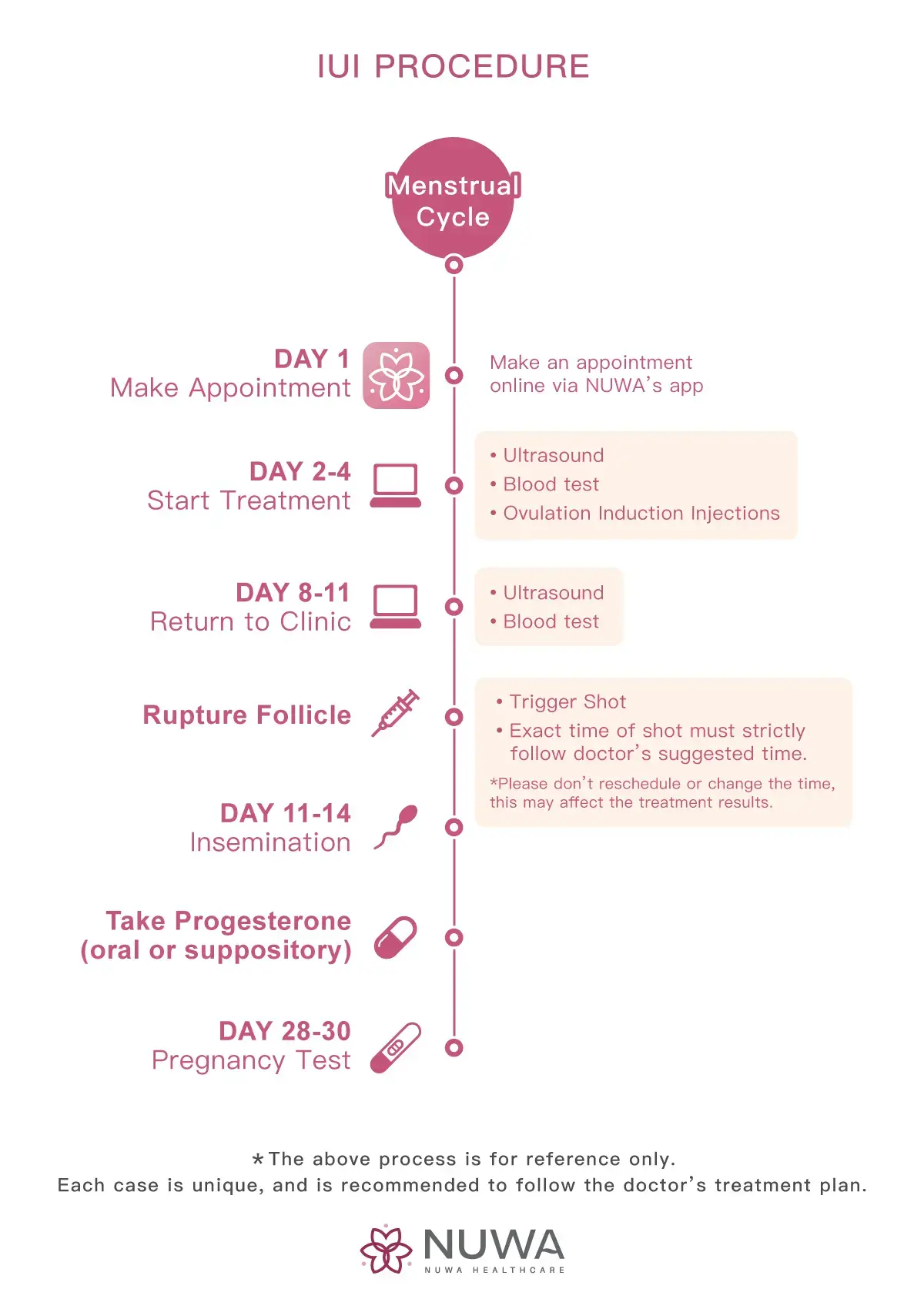
The artificial insemination process is carefully timed with ovulation and typically includes:
- Initial Consultation:Fertility evaluation and treatment planning.
- Ovarian Stimulation (Cycle Days 2–4):Medications may be used to stimulate follicle development.
- Follicle Monitoring (Cycle Days 8–11):Ultrasound and hormone tests track egg development.
- Ovulation Trigger:A trigger shot is administered when follicles mature.
- Sperm Preparation and Insemination (Cycle Days 11–14):Sperm is washed and concentrated, then inserted into the uterus.
- Luteal Phase Support:Progesterone may be prescribed to support implantation.
- Pregnancy Test (Around Day 28–30):Blood test to confirm pregnancy
Success Rate of Artificial Insemination
The average success rate of artificial insemination (IUI) is approximately 15–20% per cycle.
Several factors influence success rates, including:
- Sperm quality (count and motility)
- Female age (higher success under age 35)
- Number of mature follicles
- Uterine and fallopian tube health
If pregnancy does not occur after 3–6 cycles, IVF may be recommended as the next step.
Benefits of Artificial Insemination
- Minimally invasive fertility treatment
- Lower cost compared to IVF
- Simple and quick procedure
- Can be combined with ovulation induction
Risks and Considerations
Artificial insemination is generally safe, but possible considerations include:
- Mild discomfort during the procedure
- Risk of multiple pregnancy (if ovulation stimulation is used)
- Lower success rates compared to IVF
Artificial Insemination FAQs
1. What is the success rate of IUI?
The success rate of artificial insemination (IUI) is approximately 15–20% per cycle. This rate varies based on key factors such as sperm quality, female age, ovarian response, and overall reproductive health.
2. Do I need to lie down after the procedure?
You only need to rest for about 5–10 minutes after insemination. Normal daily activities can be resumed afterward.
3. Is vaginal discharge normal after IUI?
Yes, mild vaginal discharge is normal. It helps maintain vaginal health. However, abnormal odor or color should be checked by a doctor.
4. When should I start IUI treatment?
It is recommended to visit your doctor between days 1–3 of your menstrual cycle to begin evaluation and planning.
When to Consider IVF Instead of IUI
If IUI is unsuccessful after multiple cycles or if there are more severe fertility issues (such as blocked fallopian tubes or significantly low sperm count), IVF may offer higher success rates.