





Reproductive Services
- Home
- Reproductive Services
- Egg Freezing
- What Is Egg Freezing?
What Is Egg Freezing?
Share
Why Consider Egg Freezing?
Women’s fertility is closely linked to age. The optimal reproductive years are typically between ages 25–35, when egg quality is at its best. After age 35, ovarian function gradually declines, and after 38, egg quality decreases more rapidly.
Egg freezing allows women to preserve higher-quality eggs at an earlier stage, providing greater flexibility for future family planning. Whether for career goals, personal timing, or not having a partner yet, egg freezing empowers women to take control of their reproductive timeline.
What Is the Best Age for Egg Freezing?
As age increases:
- Egg quantity decreases
- Egg quality declines, affecting fertilization and embryo development
- Risk of chromosomal abnormalities increases
- Risk of miscarriage becomes higher
After age 40, the rate of chromosomal abnormalities rises significantly. Therefore, freezing eggs earlier can help preserve better-quality eggs and improve future success rates.
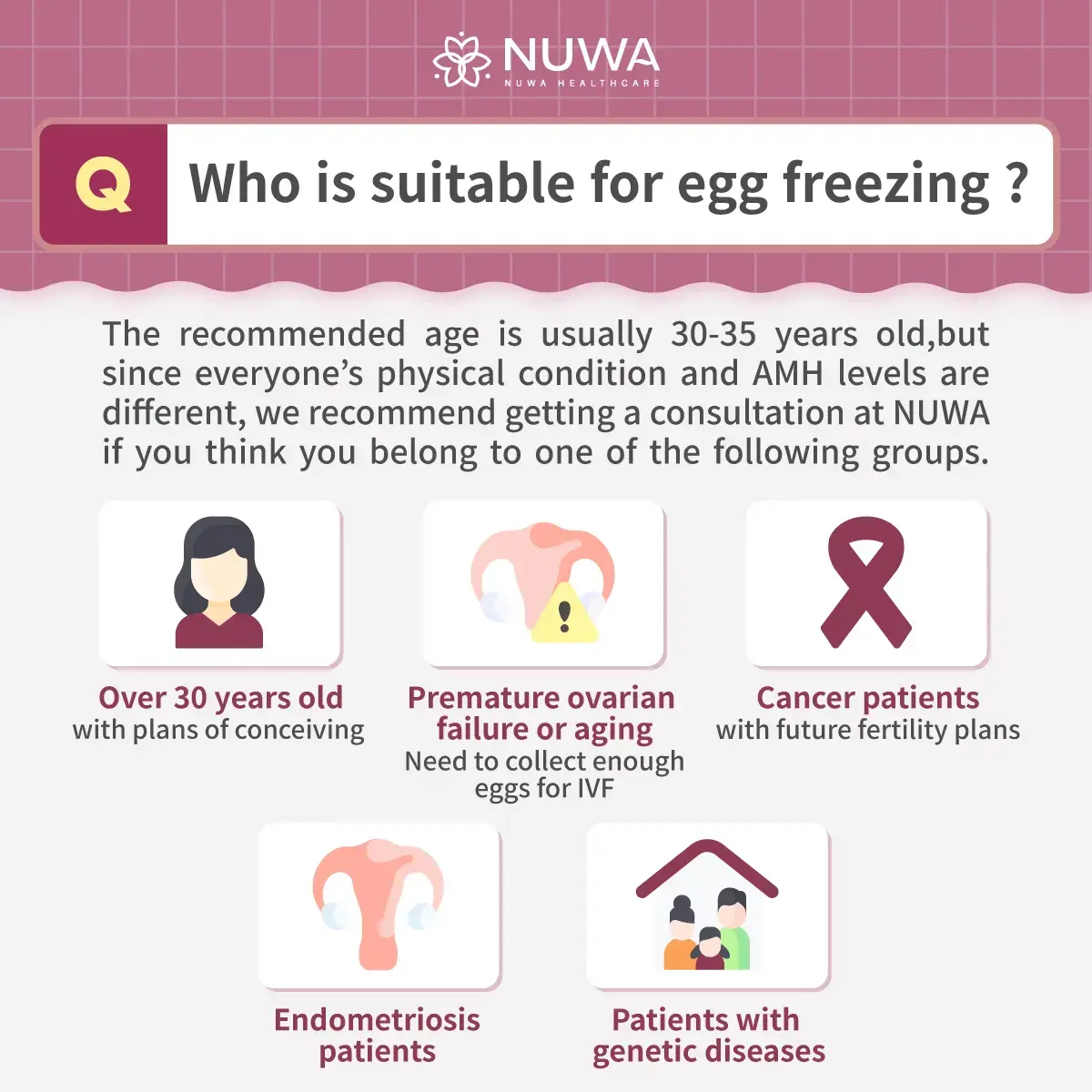
Who May Consider Egg Freezing?
Egg freezing may be suitable for:
- Women diagnosed with cancer who need fertility preservation before treatment
- Women with diminished ovarian reserve or premature ovarian aging
- Individuals with a family history of early menopause or autoimmune diseases
- Women with gynecological conditions such as ovarian cysts or severe endometriosis
- Single women who wish to preserve fertility
- Women aged 34+ without immediate pregnancy plans
- Same-sex female couples planning for future parenthood
- Couples with male factor infertility (e.g., low sperm count or azoospermia)
The First Step Before Egg Freezing: AMH Testing
AMH (Anti-Müllerian Hormone) is an important indicator used to assess ovarian reserve. A simple blood test measuring AMH levels can help estimate the number of eggs remaining.
However, it is important to note that AMH reflects egg quantity, not egg quality.
✨ NUWA Fertility offers rapid AMH testing, with results available within 90 minutes.
| AMH Level (ng/mL) | >7 | 2–5 | 1–2 | <1 |
| Ovarian Reserve | Very high | Normal | Low | Very low |
How Many Eggs Should You Freeze?
Younger eggs tend to have better quality, so even freezing fewer eggs at a younger age can still result in higher live birth rates.
| Age | 25–34 | 35–37 | 38–40 | ≥41 |
| Recommended Eggs to Freeze | 8 | 10 | 15–20 | 20+ |
* Each person’s situation is different. Consultation with a reproductive specialist is recommended.
Egg Health Tips: How to Support Healthy Eggs Before Freezing
- Follow a Mediterranean-style diet and drink plenty of water
- Avoid smoking, alcohol, and refined sugars
- Maintain regular exercise and moderate sun exposure
- Keep a consistent sleep schedule and manage stress
- Minimize exposure to environmental hormones
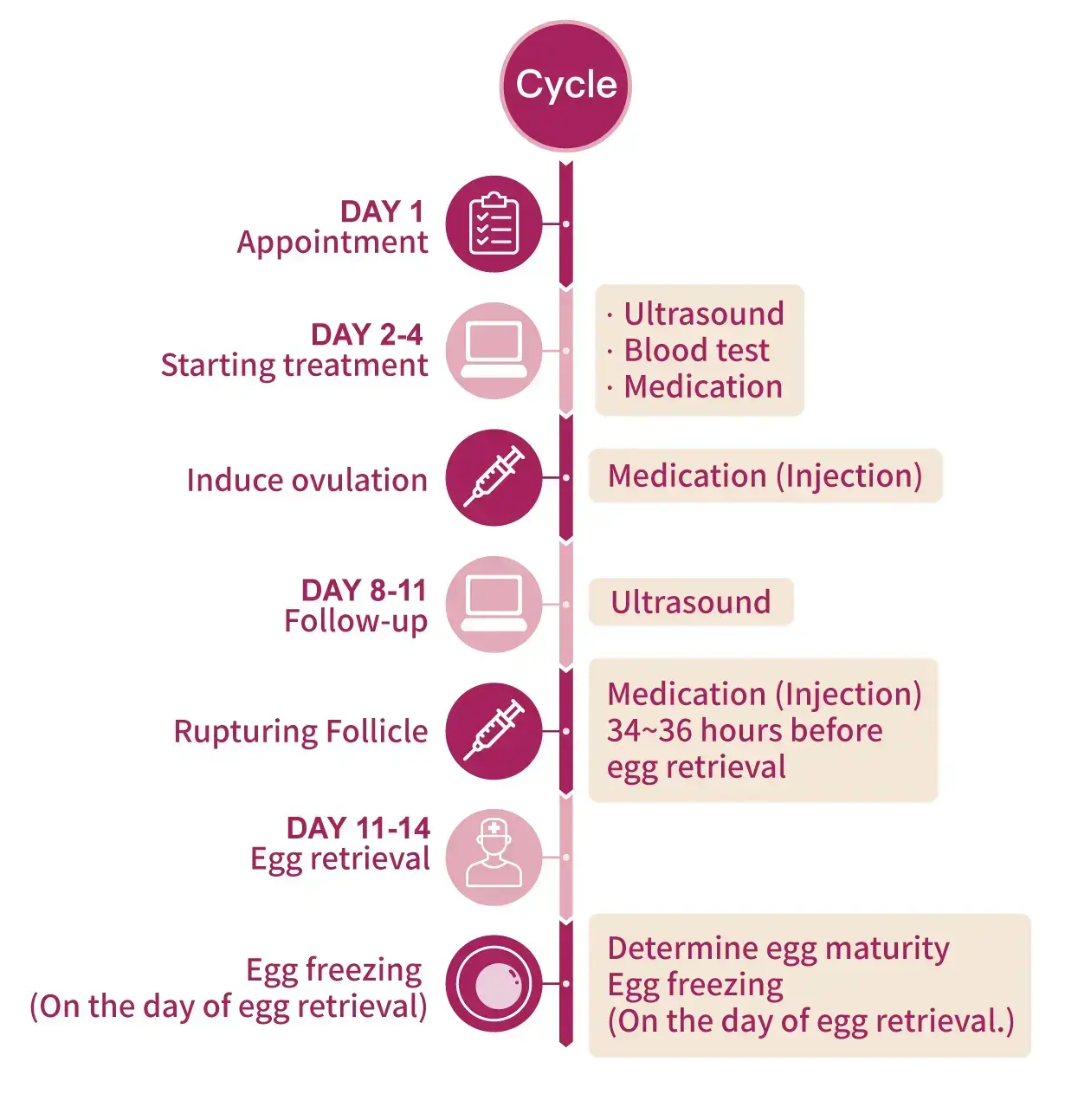
The Egg Freezing Process: Step by Step
The egg freezing process typically includes:
- Consultation and evaluation with a reproductive specialist
- Ovarian stimulation using fertility medications
- Follicle monitoring and ovulation trigger
- Egg retrieval procedure
- (Performed under IV sedation; the procedure usually takes about 15–20 minutes)
- Freezing and storage of mature eggs using vitrification
Ovarian Stimulation: Injection Options
Treatment plans are personalized based on individual needs. There are generally two types of stimulation protocols:
| Long-acting injection | Short-acting injection | |
| Frequency | Administered according to the physician’s plan | Every 1–2 days |
| Features | Fewer injections and clinic visits, more convenient | Allows physicians to closely monitor follicle growth and adjust medication |
Flexible Scheduling for Busy Lifestyles
For women whose schedules make it difficult to follow a standard menstrual cycle protocol, NUWA Fertility offers professional and flexible customized egg freezing plans.
Whether you are a cancer patient needing urgent fertility preservation before treatment, or someone who frequently travels internationally, lives abroad, or has a demanding work schedule that makes regular cycle monitoring difficult, you can consult with our physicians for a personalized treatment timeline.
We understand that every woman’s life and health situation is unique. Egg freezing does not have to follow a rigid schedule—it can be adjusted to fit each individual’s circumstances.
Women living or working overseas are welcome to schedule a consultation. Our team will help you complete the egg freezing process within a limited timeframe.
Before Egg Retrieval (Egg Freezing Surgery): Important Precautions
- No food or water for at least 8 hours before the procedure
- Do not wear contact lenses, makeup, jewelry, or nail polish (including gel nails), and avoid fragrances
- Inform your doctor of all medical history and medications for chronic conditions
- Wear loose and comfortable clothing on the day of the procedure
Recovery and Post-Procedure Care After Egg Retrieval
- Drink plenty of water (at least 1500 cc)
- Follow a high-protein diet (eggs, dairy, soy, fish, chicken)
- Take vitamins from fruits and vegetables (such as spinach and blueberries)
- Avoid spicy foods, alcohol, and irritating foods
- Do not ride or drive a scooter, drive a car, or ride as a scooter passenger within 24 hours
- Avoid bathing in tubs or swimming until the incision has healed
- Avoid intense exercise and sexual activity until the next menstrual cycle
⚠ If you experience heavy bleeding (a pad fully soaked within 1 hour) or severe abdominal pain, please return to the clinic or seek emergency medical care immediately.
Why Choose NUWA Fertility Center for Egg Freezing?
NUWA Fertility Center is trusted by both local and international patients for safe and professional egg freezing services.
Key advantages include:
- A large, reputable reproductive medical network in Taiwan
- International-level embryology laboratories with strict quality control
- High egg survival rates after thawing, improving future pregnancy success
- Services for international patients, with Chinese, English, Japanese, and Cantonese-speaking teams
- Injection assistance services for those uncomfortable with self-injections
- Customized treatment scheduling for busy professionals or women living abroad
- Rapid test results within 90 minutes, minimizing time spent in Taiwan
- Integration of Traditional Chinese Medicine to support egg quality
Planning After Egg Freezing: From Freezing Eggs in Taiwan to International Fertility Treatment
Many women who freeze their eggs in Taiwan ask:
“How can I use my eggs later? Can I pursue fertility treatment overseas?”
Under Taiwan’s Assisted Reproduction Act, frozen eggs can currently be used only by married heterosexual couples within Taiwan. However, single women and same-sex couples may pursue parenthood through international egg export, allowing them to continue their fertility journey abroad.
NUWA Fertility can assist patients with the overseas egg export process after egg freezing. This allows you to pursue treatment at legally approved fertility centers overseas, such as sperm donation or other assisted reproductive procedures, in a safe and compliant manner.
This pathway is especially suitable for women who wish to delay childbearing or plan to build their families in other countries.
Contact Us for Egg Freezing Consultation
If you would like to learn more about egg freezing or schedule a consultation, our team is here to help you create a safe, personalized fertility plan tailored to your needs.