





Reproductive Services
- Home
- Reproductive Services
- Infertility Examination
- Hysteroscopy
Hysteroscopy
Share
What Is Hysteroscopy?
Hysteroscopy is a minimally invasive medical procedure used to examine the inside of the uterus (uterine cavity). It allows doctors to directly visualize the uterine environment and diagnose or treat conditions that may affect fertility or overall uterine health.
Through hysteroscopy, fertility specialists can accurately identify abnormalities such as:
- Endometrial polyps
- Submucosal fibroids
- Intrauterine adhesions
- Uterine septum or structural abnormalities
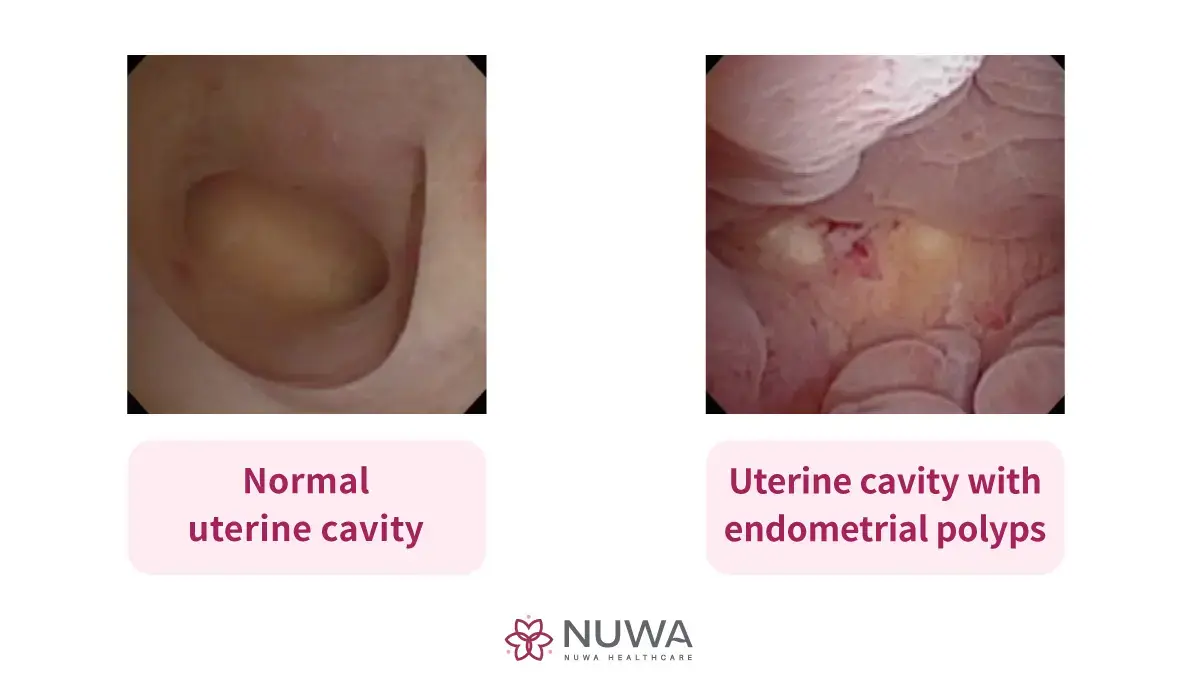
This examination plays an important role in evaluating infertility and recurrent miscarriage.
Why Is Hysteroscopy Performed?
Hysteroscopy is recommended for patients experiencing:
Infertility or Recurrent Miscarriage
The procedure helps assess whether the uterine cavity provides a healthy environment for embryo implantation.
Abnormal Uterine Conditions
Hysteroscopy allows doctors to detect and evaluate conditions such as:
- Endometrial polyps
- Uterine fibroids
- Intrauterine adhesions
- Congenital uterine abnormalities
Once identified, appropriate treatment can be planned to improve fertility outcomes.
When Is Hysteroscopy Performed?
Hysteroscopy is typically scheduled after menstruation ends and before ovulation, usually between day 7 and day 11 of the menstrual cycle.
This timing allows doctors to clearly visualize the uterine cavity while avoiding potential pregnancy.
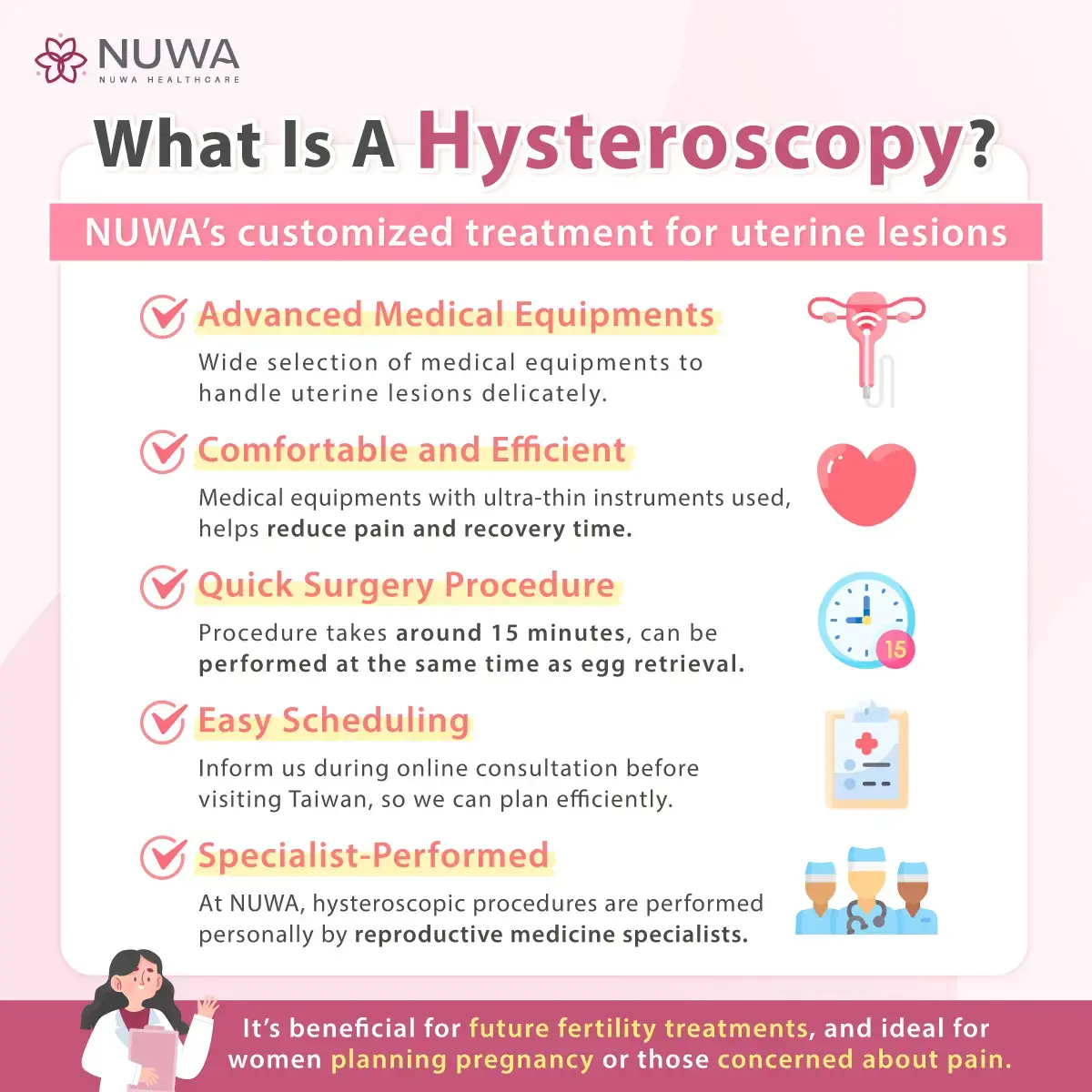
Hysteroscopy Procedure
During the procedure:
- A thin hysteroscope is gently inserted through the vagina and cervix into the uterus.
- A small amount of sterile fluid is infused to expand the uterine cavity.
- The doctor examines the uterine lining using a small camera attached to the hysteroscope.
This technique provides clear visualization of the uterine cavity and helps detect any abnormalities affecting fertility.
Types of Hysteroscopy
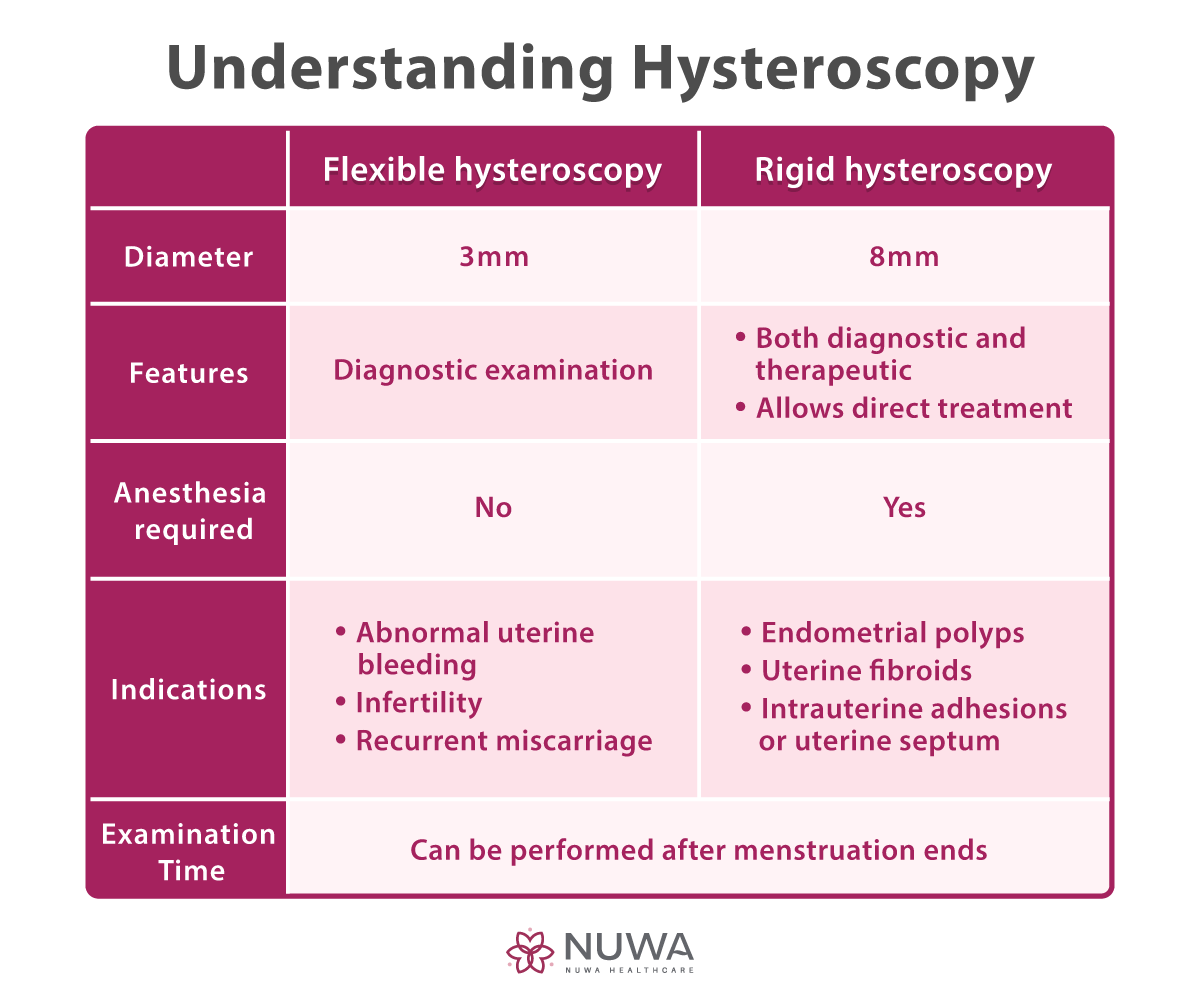
At NUWA Fertility Center, hysteroscopy procedures may be performed using either flexible diagnostic hysteroscopy or operative hysteroscopy depending on the patient's condition.
Flexible Hysteroscopy (HSC – 3mm)
Purpose: Diagnostic examination
Features
- Very thin hysteroscope (approximately 3 mm in diameter)
- Usually no anesthesia required
- Minimally invasive with short examination time
Common indications
- Abnormal uterine bleeding
- Infertility evaluation
- Recurrent miscarriage
Post-procedure reactions
Patients may experience mild abdominal discomfort or light vaginal discharge, which is usually temporary.
Operative Hysteroscopy (RSC – 8mm Resectoscope)
Purpose: Diagnosis and treatment
Features
- Slightly larger instrument (about 8 mm in diameter)
- Performed under anesthesia
- Allows doctors to treat uterine abnormalities during the procedure
Common indications
- Endometrial polyps
- Submucosal fibroids
- Intrauterine adhesions
- Uterine septum
This approach enables doctors to remove lesions directly without abdominal surgery.
Treatment for Endometrial Polyps
What Are Endometrial Polyps?
Endometrial polyps are benign growths formed by abnormal proliferation of endometrial tissue.
They may cause:
- Irregular menstrual bleeding
- Abnormal discharge
- Infertility
- Recurrent miscarriage
Removing polyps can improve uterine health and fertility outcomes.
Polyp Removal Techniques
Traditional Electrocautery
Principle:
Uses heat energy to remove polyps.
Limitations
- May damage surrounding endometrial tissue
- Longer recovery time
Cold Knife Technique (Modern Hysteroscopic Removal)
Principle:
Uses precise mechanical cutting technology to remove polyps.
Advantages
- Minimal damage to the endometrium
- Faster recovery
- More precise removal
This technique is increasingly used in advanced fertility centers.
⚠️ Kind Reminder: A hysteroscopy is a specialized procedure that must be scheduled in advance and cannot be performed on the same day as a regular outpatient appointment.
The timing of the examination will be arranged by our medical team based on your individual condition and menstrual cycle. Please contact us by phone or through our official LINE account for a consultation so we can help schedule an appropriate appointment time.
Hysteroscopy Q&A
1. Is bleeding normal after hysteroscopy?
Mild vaginal bleeding after the procedure is normal. However, if heavy bleeding or severe abdominal pain occurs, patients should contact their doctor immediately.
2. Will there be an incision after hysteroscopy surgery?
No. Hysteroscopy is a minimally invasive procedure performed through the vagina, so there are no abdominal incisions.
3. Do I need to rest after hysteroscopy?
Patients are usually advised to rest at the clinic for 30–60 minutes after the procedure. If there are no significant symptoms, patients can return home the same day.
4. Can I exercise after hysteroscopy?
Light activity is generally acceptable if there is no discomfort. For intense exercise or gym workouts, it is recommended to wait about one week.
5. When can I resume sexual activity after hysteroscopy?
Patients are usually advised to avoid sexual intercourse for about one week after the procedure.
Why Hysteroscopy Matters in Fertility Care
Hysteroscopy provides a direct and accurate way to evaluate the uterine cavity. For patients experiencing infertility or repeated implantation failure, identifying and treating uterine abnormalities can significantly improve the chances of successful pregnancy.
At NUWA Fertility Center, hysteroscopy is performed by experienced reproductive specialists using advanced equipment to ensure safe, precise, and patient-centered care.