



Donor/ Recipient
- Home
- Donor/ Recipient
- Donor Sperm
- Donor Sperm IVF Process
Donor Sperm IVF Process
Share
Donor sperm IVF (sperm donation treatment) is an assisted reproductive treatment in which donor sperm is used to fertilize the eggs of the intended mother, followed by an embryo transfer into her uterus.
At NUWA Fertility Center, all donor sperm used in treatment undergo strict screening, including semen analysis, medical evaluation, genetic testing, and infectious disease screening. All procedures comply with Taiwan’s Artificial Reproduction Act to ensure safety, ethics, and patient protection.
Who Needs Donor Sperm IVF?
If you have the following conditions, donor sperm IVF may be recommended after medical evaluation.
Medical Indications
- Azoospermia (no sperm production)
- Chromosomal abnormalities
- Genetic diseases that may affect offspring health
- Severe male infertility diagnosed through medical evaluation
Patients are encouraged to consult a fertility specialist to determine the most appropriate treatment plan.
Why Choose NUWA for Donor Sperm Treatment?
NUWA Fertility Center provides a comprehensive and regulated donor sperm program to support couples on their fertility journey.
Key Advantages
- Independent sperm bank with stable donor resources
- Donor screening beyond national regulatory standards
- Cryopreserved donor sperm stored at -196°C in liquid nitrogen
- Personalized IVF treatment planning by experienced specialists
Donor sperm is carefully frozen and preserved, and thawed when used for IVF treatment with the partner’s eggs.
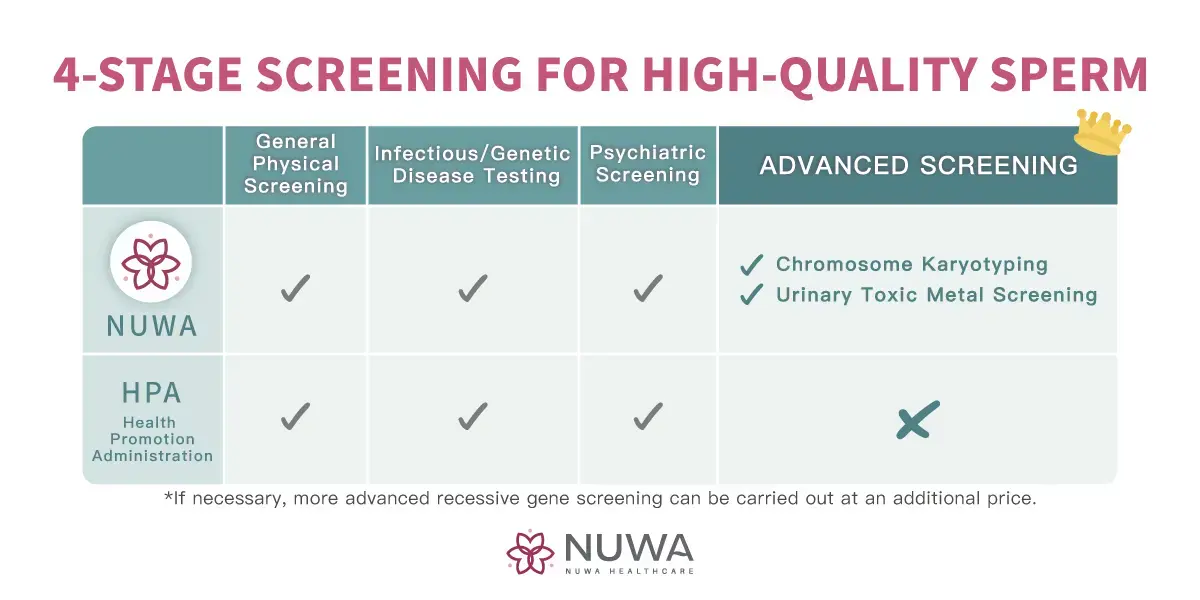
Donor Sperm Screening System
At NUWA, all donor sperm undergo a multi-stage evaluation process to ensure high quality and safety before use in treatment.
Step-by-Step Donor Sperm IVF Process
Step 1: Initial Consultation
- Consultation with fertility specialist
- Fertility assessment and treatment planning
- Registration of treatment intent
Step 2: Legal Documentation & Family Relations Verification
Couples must complete legal documentation in accordance with Taiwan regulations.
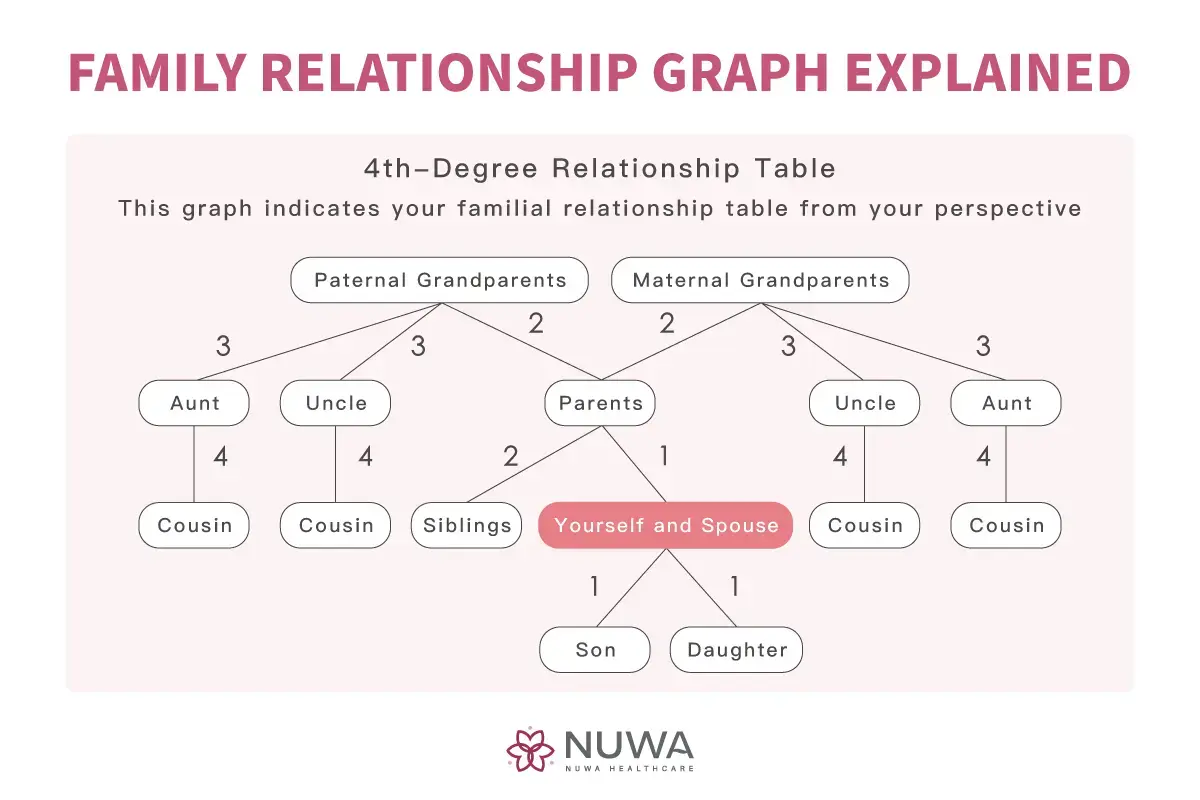
This includes submitting a “Reproductive Medicine Diagnosis Certificate” and applying for a family relationship certificate from the Household Registration Office, including:
- Second-degree relatives of the husband
- Fourth-degree relatives of the wife
Step 3: Notarization of Consent
Both partners must complete notarization at a court or certified notary office.
Required documents:
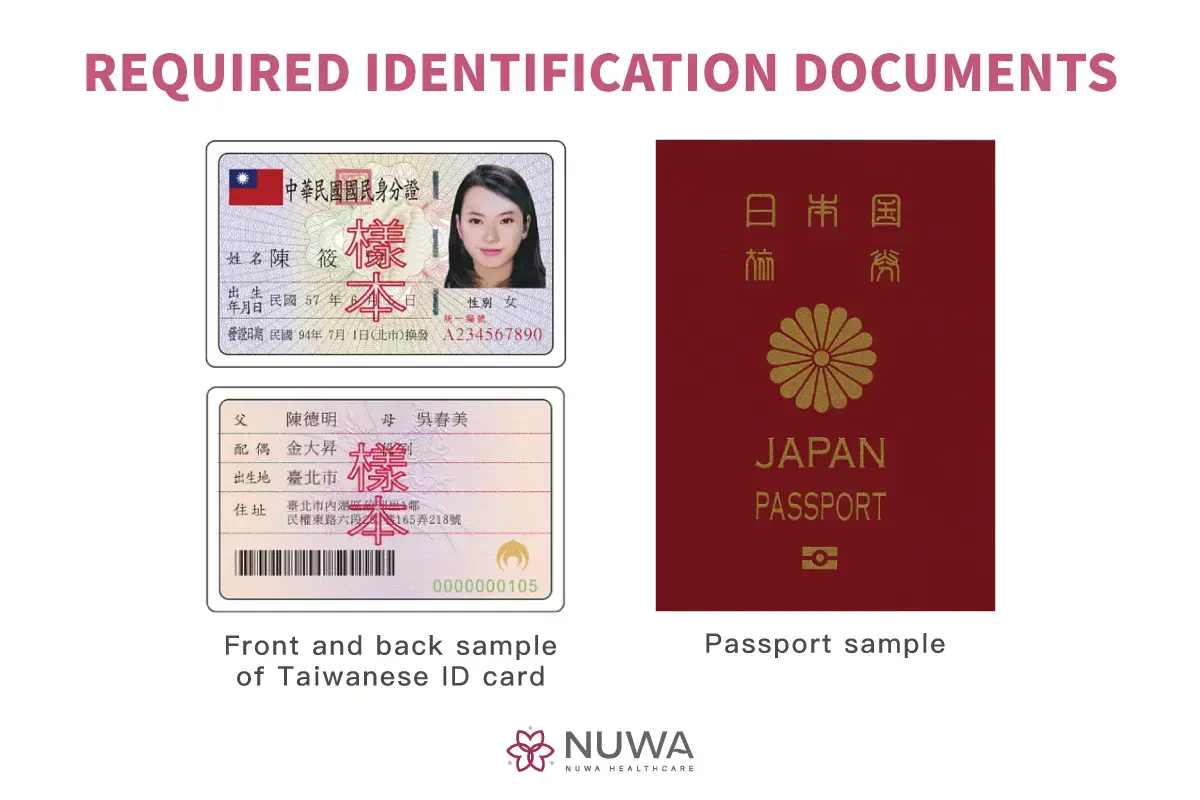
- Identification documents and personal seals
- Donor sperm consent form
Step 4: Medical Testing & Document Submission
Comprehensive medical evaluation is required for both partners.
Medical tests include:
- HIV, syphilis, blood type, RH factor
- Female fertility evaluation such as:
- Hysterosalpingography (HSG)
- Hysteroscopy
- Endometrial receptivity assessment (ERA), if needed
Medical plans may vary depending on individual conditions.
Required documents include:
- Signed donor sperm consent form (valid for 1 year)
- Family relationship certificate
- IVF treatment consent forms
- Medical test reports
- Identification documents and marriage certificate
For international patients:
- Passport and secondary ID (driver’s license, national ID, etc.)
- Certified marriage certificate (valid within 3 months)
Marriage Registration Guidelines
Taiwan registration
- Taiwanese partner: National ID
- Foreign partner: Passport + marriage certificate
China registration
- Marriage certificate must be notarized locally and submitted to SEF Taiwan
- Original documents must be sent to NUWA Fertility Center
Other countries
- Marriage certificate must be authenticated by TECO (Taipei Economic and Cultural Office)
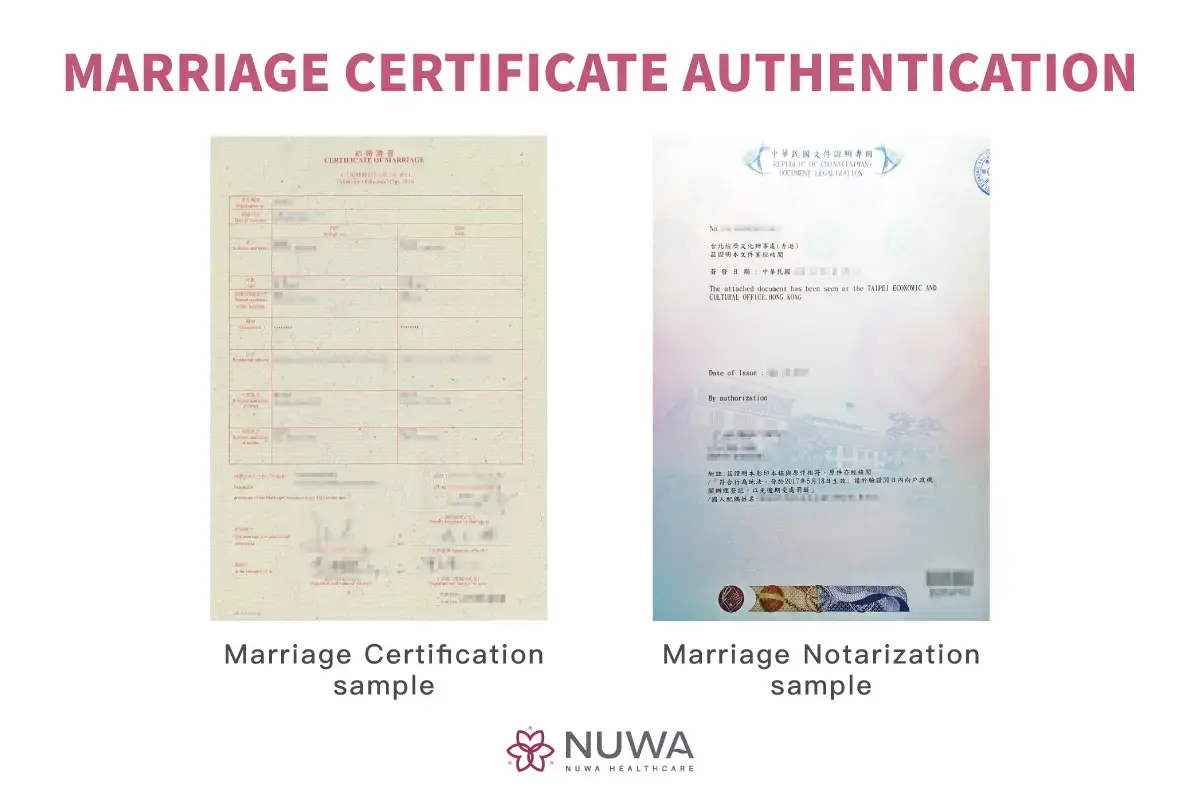
Step 5: Donor Sperm Matching & Approval
- Submission of all required documents
- Government review and approval (approximately 3–4 weeks)
Step 6: IVF Treatment Begins
- Start IVF cycle on day 2–4 of menstrual period
- Ovarian stimulation and egg retrieval
- Fertilization with donor sperm
- Embryo transfer and follow-up
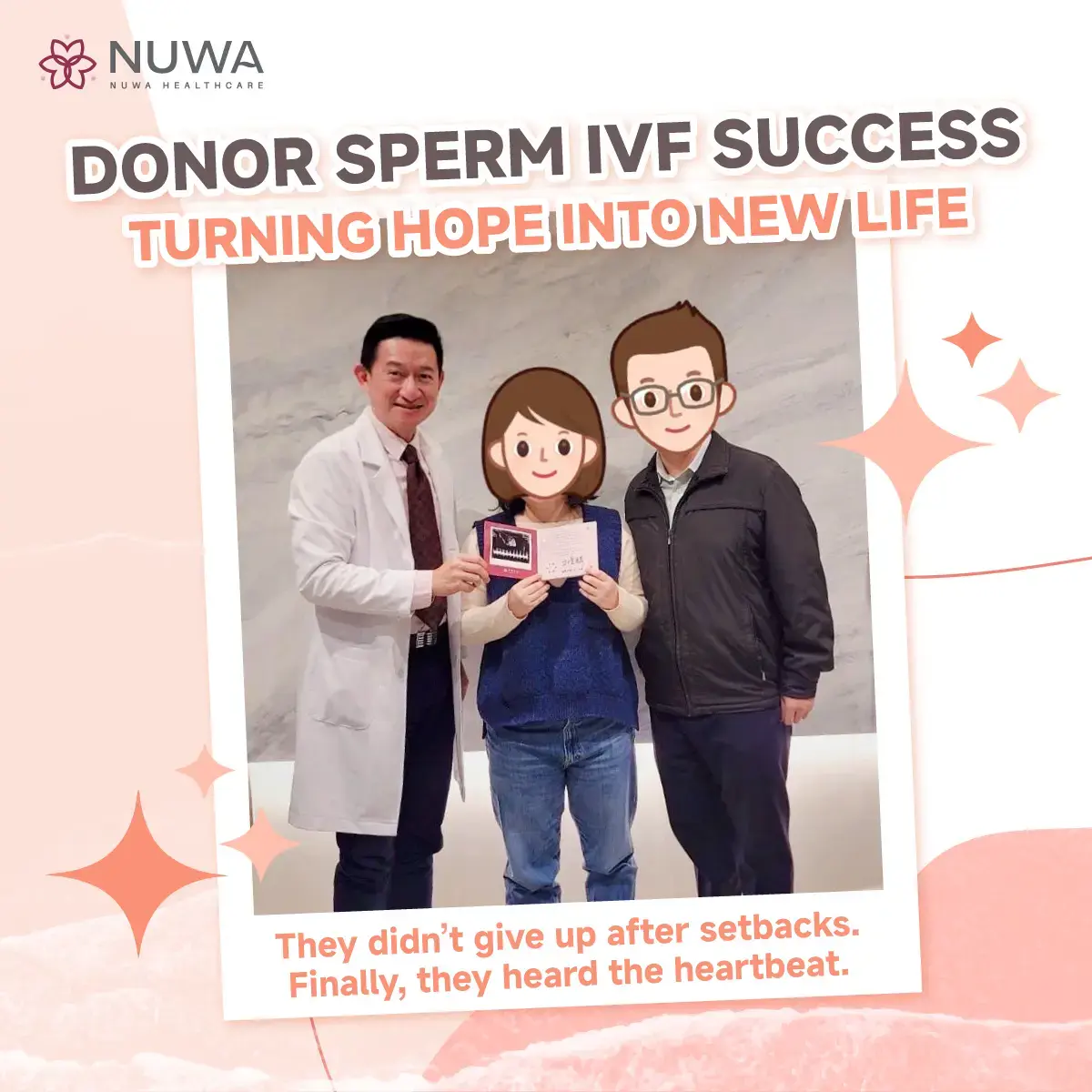
From Despair to Miracle – A Donor Sperm IVF Success Story
After being diagnosed with azoospermia, the couple chose donor sperm IVF and began their fertility journey. After three failed embryo transfers at another clinic, they turned to NUWA for one final attempt.
Due to previous experiences, the patient felt anxious about injections. The physician adjusted the treatment protocol to reduce discomfort. Although the fourth transfer was unsuccessful, the team continued to provide support and encouragement.
Before the fifth transfer, early test results showed a low β-hCG level. However, with continued care, the levels increased steadily. The couple eventually confirmed a fetal heartbeat—marking the beginning of a new life.
By W.