





Reproductive Services
- Home
- Reproductive Services
- IVF
- IVF Process: Step-by-Step Guide
IVF Process: Step-by-Step Guide
Share
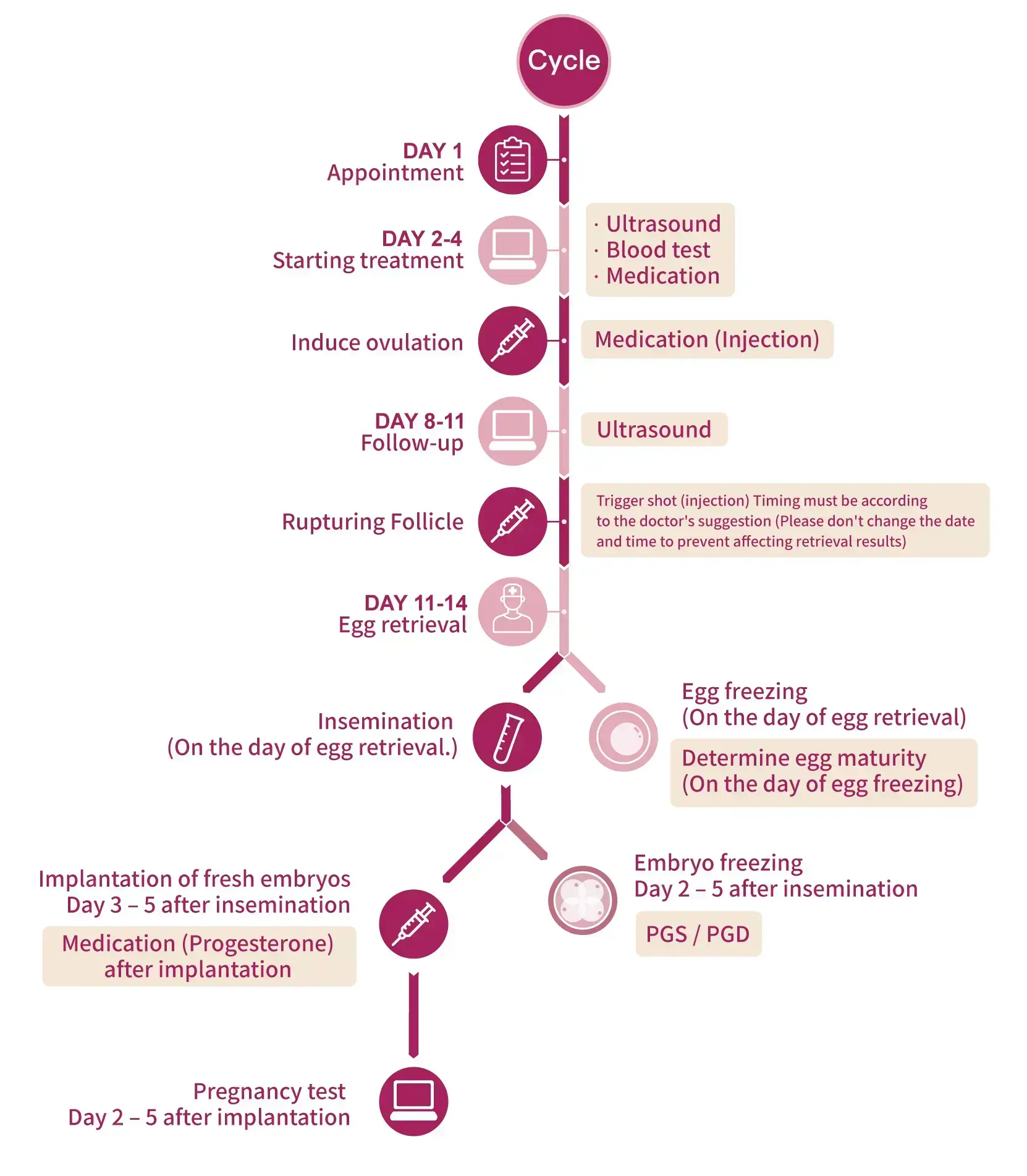
Step 1: Initial Consultation and Fertility AssessmentIVF treatment typically begins during days 2–4 of the menstrual cycle. Patients undergo blood tests (FSH, E2, LH, AMH) and ultrasound to evaluate ovarian reserve and hormone levels. Based on the results, doctors design a personalized ovarian stimulation plan.
Step 2: Ovarian Stimulation and MonitoringHormonal medications are used to stimulate multiple follicles. Regular blood tests and ultrasounds are required to monitor follicle growth and hormone levels. Once follicles reach optimal size, a trigger shot is administered to prepare for egg retrieval.
Step 3: Egg Retrieval and Sperm Collection
Egg Retrieval:
Egg retrieval is a minor outpatient procedure with a short duration and no surgical incision. Patients may choose sedation based on their preference.
Semen Collection:
Abstinence for 2–4 days is recommended before collection. Semen can be collected on-site or prepared in advance and delivered to the laboratory within 2 hours.
Step 4: Fertilization and Embryo Culture
Eggs are fertilized with sperm in the laboratory. The resulting embryos are cultured for 3–5 days to monitor their development and quality.
Step 5: Embryo Transfer and Pregnancy Test
A selected embryo is transferred into the uterus. About 10–14 days later, a blood test (β-hCG) is performed to confirm pregnancy. If successful, follow-up care will support early pregnancy development.
Should You Consider PGT-A (Genetic Testing)?
PGT-A can be recommended for patients with advanced age, recurrent miscarriage, or repeated implantation failure. It helps identify chromosomally normal embryos, improving implantation rates and reducing miscarriage risk.