





Reproductive Services
- Home
- Reproductive Services
- Infertility Examination
- Hysterosalpingography (HSG)
Hysterosalpingography (HSG)
Share
What Is Hysterosalpingography (HSG)?
Hysterosalpingography (HSG) is a diagnostic X-ray procedure used to examine the uterus and fallopian tubes. It is commonly performed as part of an infertility evaluation to determine whether the fallopian tubes are open (patent) or blocked.
The test also helps doctors detect structural abnormalities of the uterus that may affect pregnancy, such as adhesions, uterine deformities, or inflammation.
HSG is one of the most important fertility tests for women trying to conceive.
Purpose of Hysterosalpingography
A hysterosalpingography examination helps evaluate:
- Fallopian tube patency (whether the tubes are open or blocked)
- Hydrosalpinx (swelling or fluid accumulation in the fallopian tubes)
- Uterine abnormalities such as adhesions or structural deformities
- Possible causes of female infertility
Identifying these conditions early allows fertility specialists to recommend appropriate treatments such as fertility medication, surgery, or assisted reproductive technologies like IVF.
When Should an HSG Test Be Performed?
The ideal timing for hysterosalpingography is after menstruation ends but before ovulation, typically between day 7 and day 11 of the menstrual cycle.
This timing ensures that:
- The uterine lining is thin for clearer imaging
- Pregnancy is avoided during the examination
HSG Procedure: How the Test Works
During a hysterosalpingography procedure:
- A small catheter is inserted through the cervix into the uterus.
- A contrast dye is gently injected into the uterine cavity.
- X-ray imaging tracks how the dye flows through the uterus and fallopian tubes.
By observing the movement of the dye, doctors can determine whether the tubes are open or blocked.
The entire procedure usually takes about 20–30 minutes.
Some women may experience mild discomfort or cramping similar to menstrual pain during the test.
Possible HSG Findings
The HSG results may show several conditions:
Normal Tubal Patency
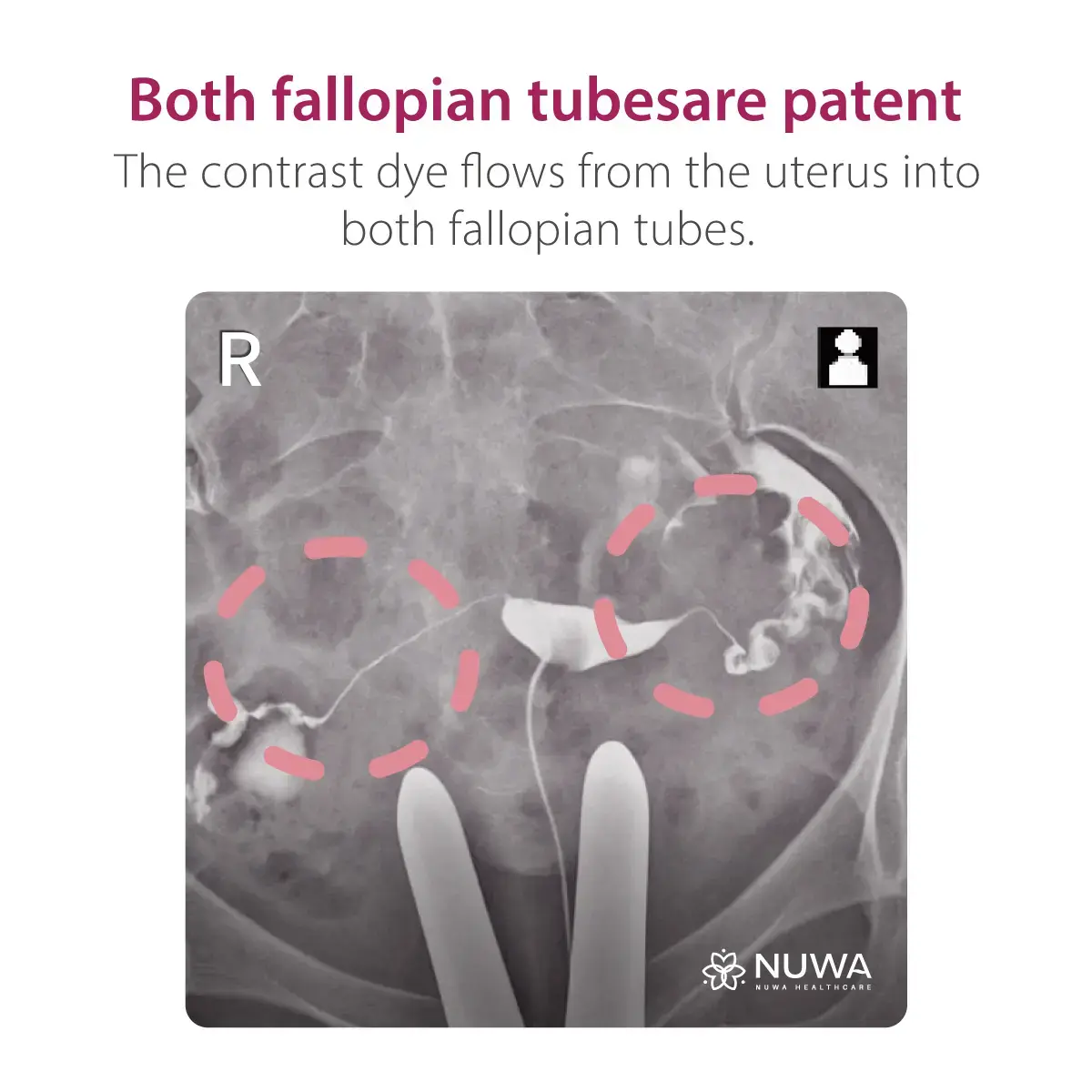
The contrast dye flows smoothly from the uterus through both fallopian tubes and into the pelvic cavity.
Hydrosalpinx (Swollen Fallopian Tubes)
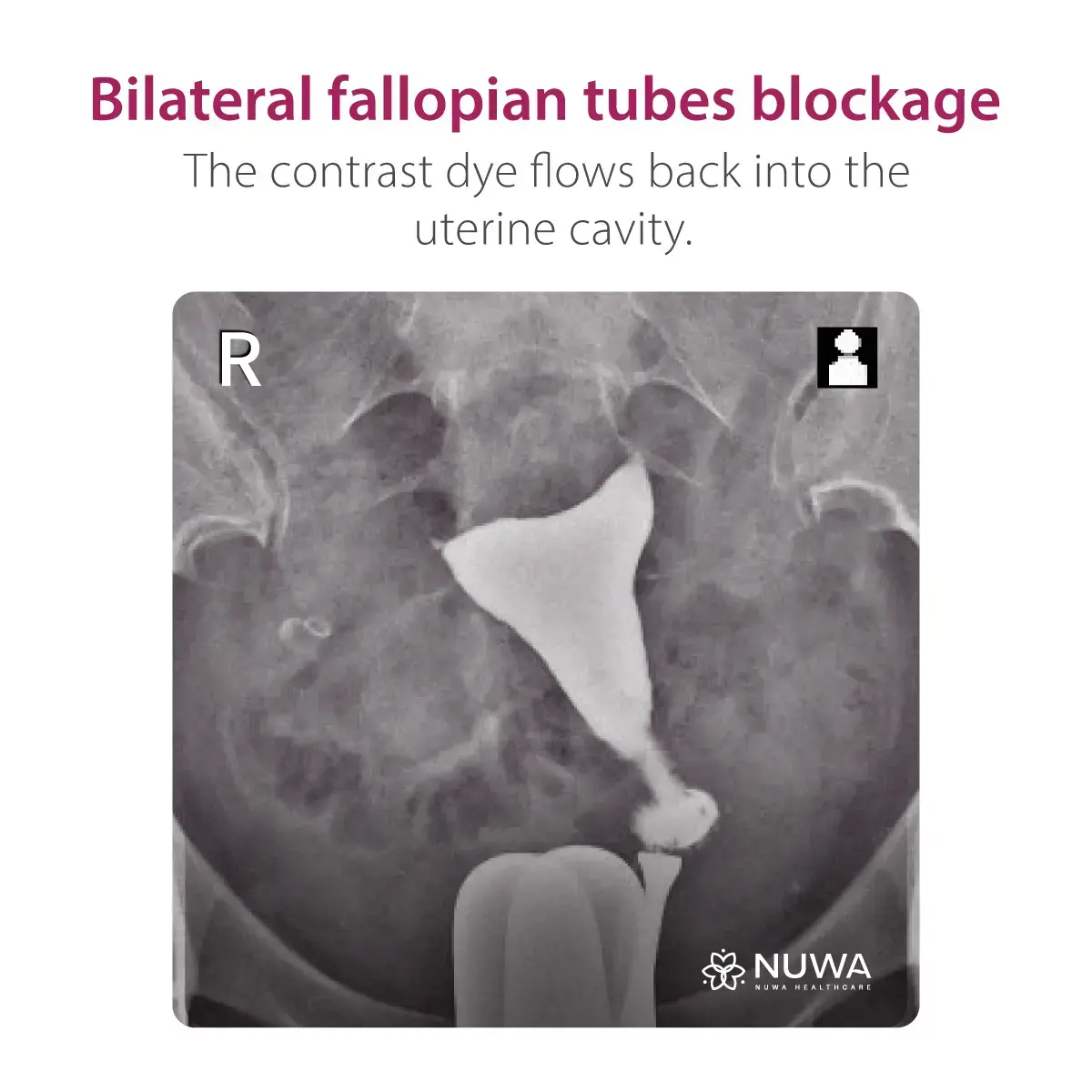
The dye highlights swelling or fluid accumulation in the fallopian tubes.
Tubal Blockage
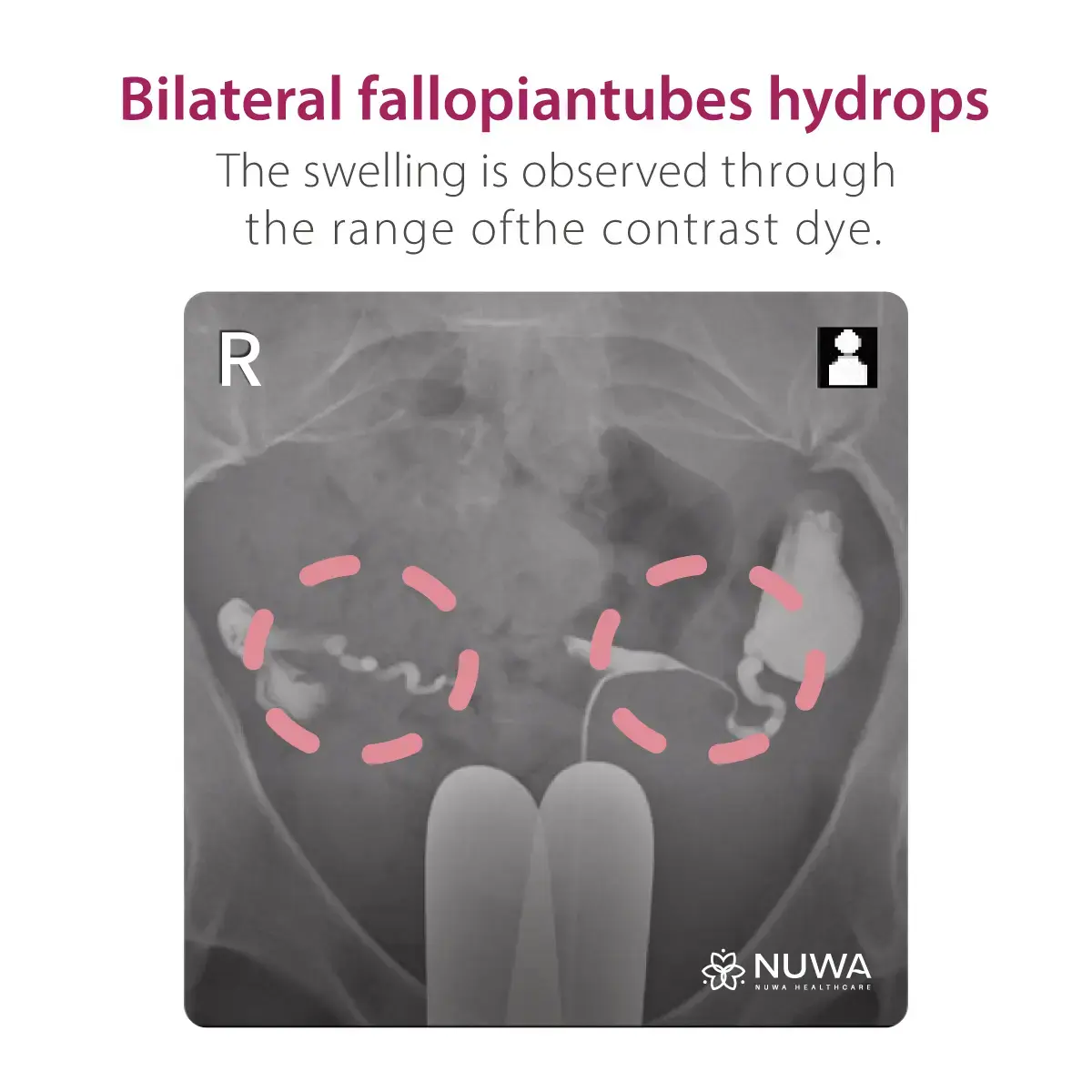
If the tubes are blocked, the contrast dye cannot pass through and may flow back into the uterine cavity.
Identifying these conditions is critical for planning fertility treatments.
Why Choose Hysterosalpingography at NUWA Fertility Center
NUWA Fertility Center provides a comfortable and professional HSG experience with several advantages:
One-Stop Consultation
Doctors review and explain the results immediately after the examination.
Sterile Disposable Medical Instruments
Imported single-use instruments help prevent cross-infection.
Performed by Experienced Fertility Specialists
Our doctors personally conduct the procedure with gentle and precise techniques.
Hypoallergenic Contrast Agent
Reduces the risk of allergic reactions.
High Privacy Environment
Our HSG examination room is designed with dual doors to ensure patient privacy and comfort.
Preparation Before the HSG Test
To prepare for the examination:
- Empty your bladder before the procedure
- Wear comfortable and easy-to-remove clothing
- Inform your doctor if you have iodine allergies or pelvic infections
These steps help ensure a smooth and safe examination.
After the HSG Examination
After the test, some patients may experience:
- Mild abdominal cramping
- Light vaginal spotting or discharge
This is generally normal and temporary. Doctors may place gauze to stop minor bleeding at the cervix, which can be removed later.
Patients are advised to bring a sanitary pad or tissues for convenience after the procedure.
Hysterosalpingography Q&A
1.Is the HSG test painful?
Pain levels vary from person to person. Most women experience mild discomfort similar to menstrual cramps, which usually lasts only a short time.
2. How long does the HSG procedure take?
The entire test usually takes around 30 minutes.
3. What should I do before the HSG test?
Patients should empty their bladder before the examination and wear comfortable clothing.
4. Is bleeding normal after the test?
A small amount of vaginal bleeding or discharge is normal after the procedure.
5. Are there any risks or side effects?
Hysterosalpingography is generally considered a very safe procedure. However, patients with iodine allergies or pelvic inflammatory disease should inform their doctor beforehand.