





Resources
- Home
- Resources
- Fertility Resources
- Fertility Tests In Singapore: Types, Costs & When to Test
Fertility Tests In Singapore: Types, Costs & When to Test
Share
Fertility tests in Singapore are often the first step for couples who are trying to conceive but not seeing results. These tests help identify potential issues affecting fertility in both women and men, allowing doctors to recommend suitable treatment options such as IUI or IVF.
In Singapore, more couples are choosing to undergo fertility testing earlier due to delayed parenthood and increasing awareness of reproductive health. Early testing can provide clarity, reduce uncertainty, and improve the chances of successful pregnancy.
In this guide, we cover the types of fertility tests, testing costs in Singapore, when to get tested, and what to expect throughout the process.


When Should You Get Fertility Tests in Singapore?
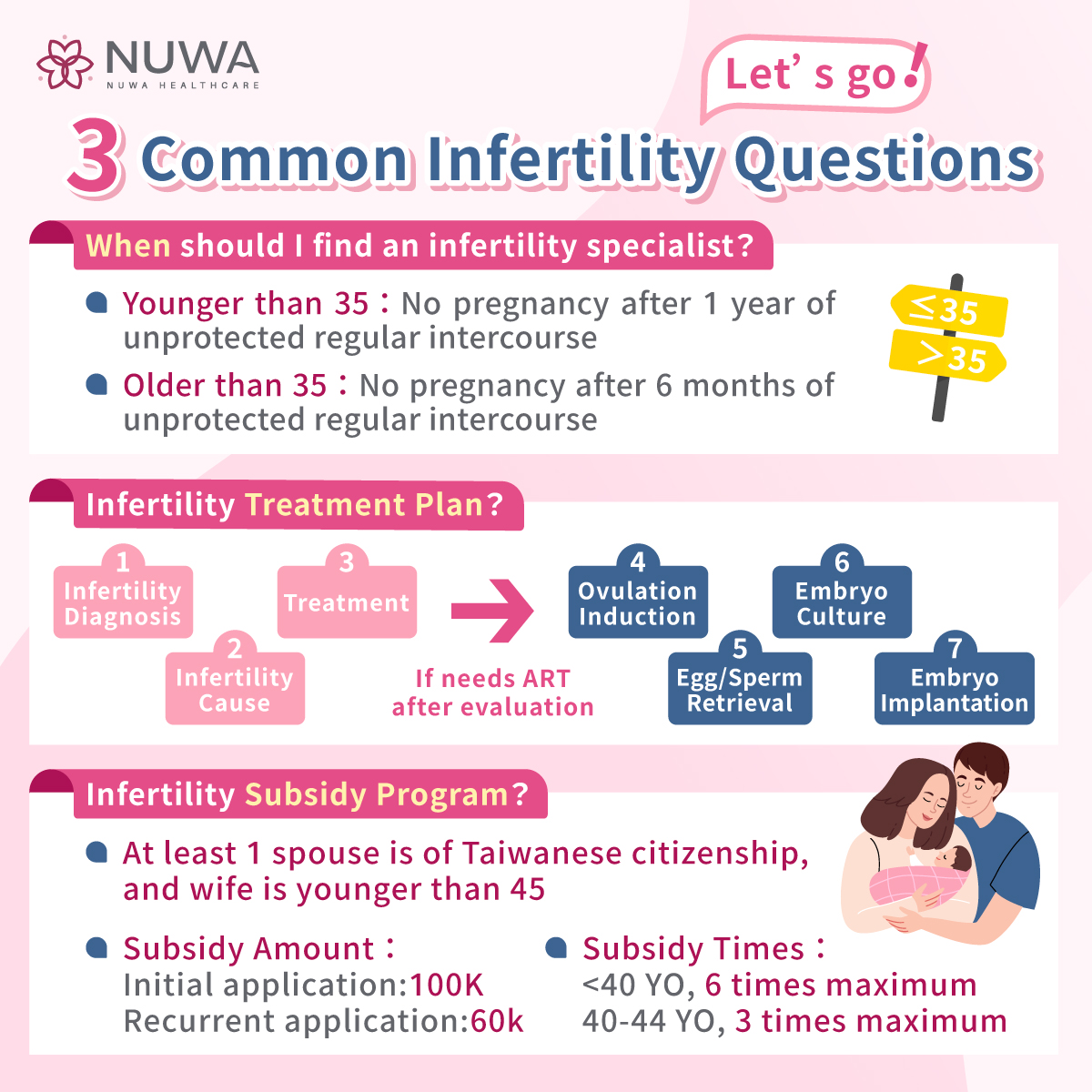
Do you know the criteria for infertility? When should you seek medical help? Usually, infertility can be classified into 2 situations below:
➜ Younger than 35 years old
If you are younger than 35 years old and have still not gotten pregnant within a year of routine sexual intercourse without protection (2-3 times per week as routine), it will qualify as infertility.
➜ Older than 35 years old
If you are older than 35 years old and have still not gotten pregnant within 6 months of sexual intercourse without protection, it will qualify as infertility.
If you meet the above criteria and have fertility plans, it is recommended that you seek professional help from an infertility doctor as soon as possible.
Where to Get Fertility Tests in Singapore?
If it is confirmed that you have infertility, which department or specialist should you go to? Couples in Singapore usually start by consulting an Obstetrician & Gynaecologist (OBGYNs) or a fertility specialist at a reproductive medicine clinic for a comprehensive evaluation.The doctor will evaluate the situation and recommend appropriate tests and examinations to find out the cause of the couple’s infertility.
Extended Reading: An Introduction to NUWA Fertility Center’s Reproductive Medicine Treatment
Types of Fertility Tests for Women and Men
A lot of people think that being diagnosed with infertility is being completely unable to conceive. However, through infertility tests, doctors can pinpoint the exact reason for infertility, and proceed with treatments that can allow couples to successfully conceive. There are tests for both men and women, as seen below:
Fertility Tests for Women
✅ Blood test
Through blood tests, hormone levels are examined, including values for Anti-Müllerian Hormone (AMH), hormone tests (FSH, LH, E2), prolactin (PRL), thyroid-stimulating hormone (TSH), testosterone, etc.
Recommended Reading:
✅ Transvaginal ultrasound
Transvaginal ultrasound involves scanning the uterus, cervix, ovaries, and other areas using a probe to obtain detailed images. Compared to abdominal ultrasound, transvaginal ultrasound provides higher accuracy and can detect conditions such as uterine fibroids, endometrial polyps, endometriomas, and ovarian tumors that may affect infertility.
✅ Hysterosalpingogram (HSG)
Hysterosalpingography examines whether or not the fallopian tubes are patent, whether there is swelling or lesions, and also checks for any abnormalities, adhesions, or deformities in the uterus. However, there may be slight and temporary discomfort during the procedure (a mild, short-lived sensation of bloating or cramping in the lower abdomen).
✅ Hysteroscopy
Infertility may be caused by factors such as endometrial polyps, uterine adhesions, or bicornuate uterus, which can affect embryo implantation. Therefore, hysteroscopies can be used to assess the condition of the endometrium. Hysteroscopies can be either flexible or rigid:
| Flexible | Rigid | |
|---|---|---|
| Purpose | For diagnostic purposes, no anesthesia or hospitalization is required. After confirming the location of the lesion, the subsequent treatment plan is discussed with the physician. | Has both diagnostic and treatment purposes, and requires anesthesia, utilizing hysteroscopy for both examination and direct treatment. |
| Lens Size | Around 3mm | Around 8mm |
| Indications | Abnormal bleeding, infertility, recurrent miscarriage | Polyps, intracavitary fibroids, intracavitary adhesions, or uterine septum. |
| Procedure | A smaller scope is used to enter the uterine cavity. During the examination, the cervix is dilated, and blood or mucus is flushed out. The physician may introduce a small amount of fluid, which may cause mild abdominal discomfort or bloating. Discharge, slight bleeding, or mild discomfort is considered normal. | Hysteroscopy enters the uterine cavity through the vagina and can directly treat lesions within the uterine cavity. Mild abdominal discomfort and slight vaginal bleeding in the days following the procedure are normal. |
| Timing | Once the menstrual cycle is finished | |
Fertility Tests for Men
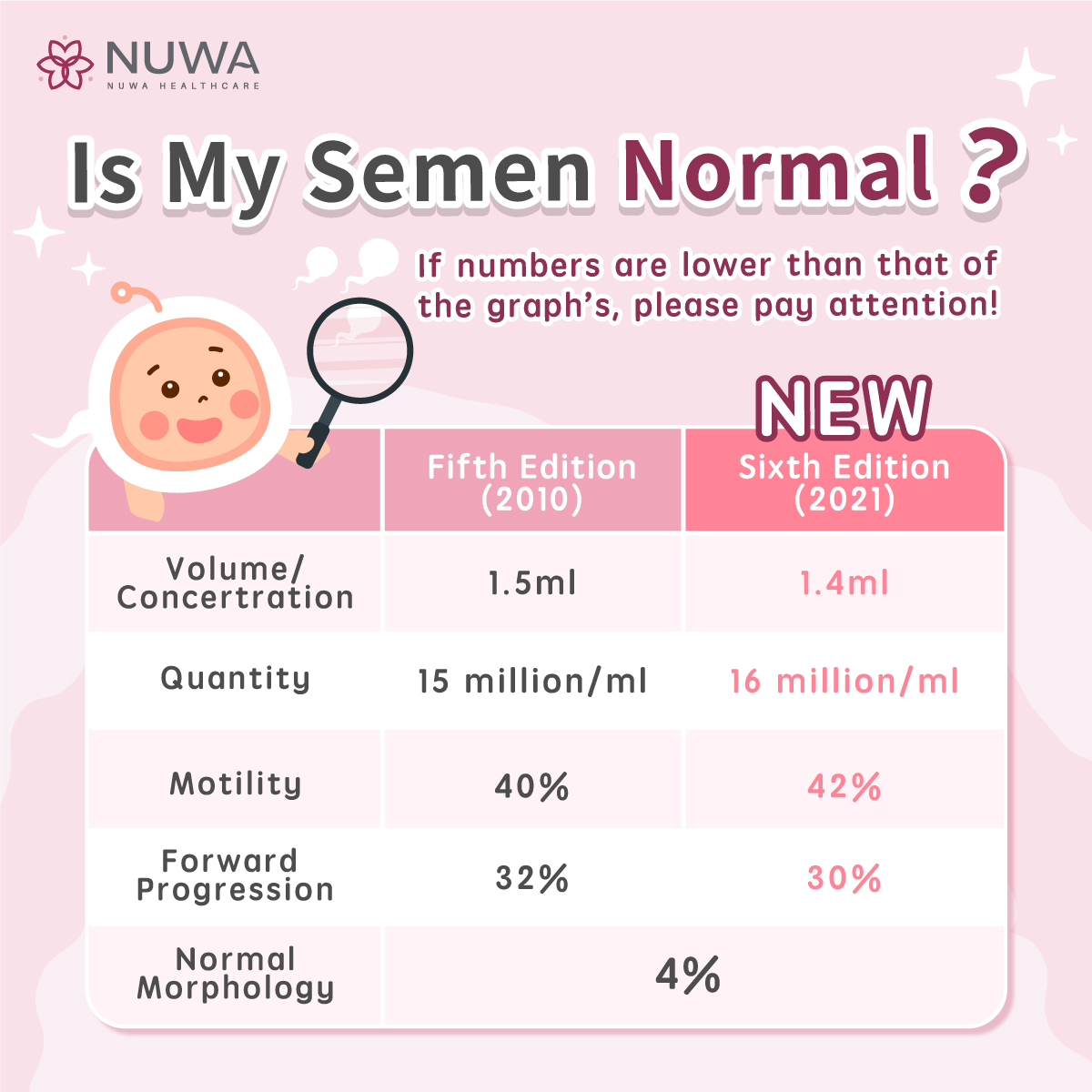
Infertility examinations aren’t just for women, men can be diagnosed with infertility too. For example, not having enough sperm (Oligospermia) or Azoospermia. Therefore, it is also imperative to test for male infertility, but examinations are a lot easier, a simple “Semen Analysis” would suffice.
Through the examination of semen analysis, doctors will be able to evaluate the sperm quantity, morphology, concentration, motility, etc. to determine whether it meets the infertility criteria or not. Diagnoses can include Varicocele or primary spermatogenic dysfunction. Most importantly, one must abstain from ejaculation for 2-4 days before the semen analysis, to acquire sperm on the day of.
Infertility Examination Costs
The cost of infertility testing varies depending on each individual’s situation and the specific tests needed. Every medical institution also has its own pricing standards. It is recommended to discuss with a professional doctor which tests are necessary, and then have the clinic provide a cost estimate. It’s important to note that a comprehensive examination is key to identifying the cause of infertility — and since either partner may be the reason for infertility, it’s best for both partners to undergo testing together.
What Happens After Fertility Testing?
If a complete infertility evaluation confirms that a couple has fertility issues, it doesn’t mean the opportunity to conceive is gone. With modern medical advances, options such as in vitro fertilization (IVF), intrauterine insemination (IUI), or integrative treatment combining Chinese and Western medicine can all improve pregnancy success rates. Based on the cause of infertility, your doctor will recommend the most suitable treatment. Below are some common options:
Intrauterine Insemination (IUI)
IUI, also known as artificial insemination, involves processing and concentrating sperm, then injecting them directly into the woman’s uterus. This allows sperm to swim toward the egg more efficiently, increasing the chances of fertilization.
IUI is most suitable for couples in which the woman has normal ovulation and open fallopian tubes, but the man has low sperm count or weak motility. The procedure is relatively simple and more affordable than IVF, often serving as the first step in infertility treatment.
Recommended Reading:
In Vitro Fertilization (IVF)
IVF is currently one of the most common infertility treatments. It involves stimulating ovulation to retrieve eggs, fertilizing them with sperm in the lab to create embryos, and then transferring healthy embryos into the uterus.
IVF helps overcome challenges such as blocked fallopian tubes, poor sperm count or motility, or multiple failed IUI attempts — making it an essential option for many couples after infertility testing.
Recommended Reading:
Traditional Chinese Medicine (TCM) Treatment
Some couples in Singapore also explore complementary approaches such as Traditional Chinese Medicine (TCM) to support fertility alongside conventional treatments like IUI or IVF.Through pulse diagnosis and body constitution analysis, TCM tailors herbal remedies and acupuncture to address specific infertility types — such as kidney deficiency, poor blood flow, phlegm-dampness, or thin endometrial lining — to nourish eggs, sperm, and the uterine lining.
These treatments can complement Western medical procedures like IUI or IVF to enhance embryo implantation and pregnancy success rates.
Considering Fertility Treatment Overseas?
Why Singapore Patients Choose Overseas Fertility Clinics
While many fertility treatments are available in Singapore, some couples also explore overseas fertility centers for more treatment options, advanced laboratory technology, or integrative care approaches.
Recommended Reading:
Recommended Fertility Center in Taiwan – NUWA Fertility Center
NUWA Fertility Center in Taiwan is a well-established reproductive medicine center known for its experienced fertility specialists and advanced embryology laboratories.
👍 Experienced IVF team
👍 Integrative Traditional Chinese & Western medicine care
👍 International-standard embryology laboratory
Located in Taipei, Taoyuan, and Taichung, NUWA provides comprehensive fertility services including IVF, IUI, egg freezing, and fertility preservation for international patients.
NUWA Fertility Center also welcomes international patients from Singapore and across Asia, offering English-speaking medical teams and personalized fertility treatment plans.
Recommended Reading:
Author's Information
NUWA Fertility Center
With many infertility experts and more than 10,000 doctors with successful IVF experience, the company has 5 clinics, including 3 high-specification IVF reproduction centers, 2 TCM centers, and 3 international embryo laboratories, which are located in Taipei, Taoyuan, and Taichung.
Main Services: Infertility treatment, IVF, artificial insemination, egg freezing, egg borrowing, and pregnancy preparation.👉Learn more about NUWA Healthcare