





Stories
- Home
- Stories
- International Healthcare Center
- IVF Over 40 Success Story: Hong Kong Patient Pregnant in Taiwan
IVF Over 40 Success Story: Hong Kong Patient Pregnant in Taiwan
Dr. Chi Jun Liao
Share
After age 40, many women wonder whether IVF can still lead to pregnancy. While fertility naturally declines with age, successful outcomes are still possible with individualized treatment, advanced embryo culture technology, and the right medical support.
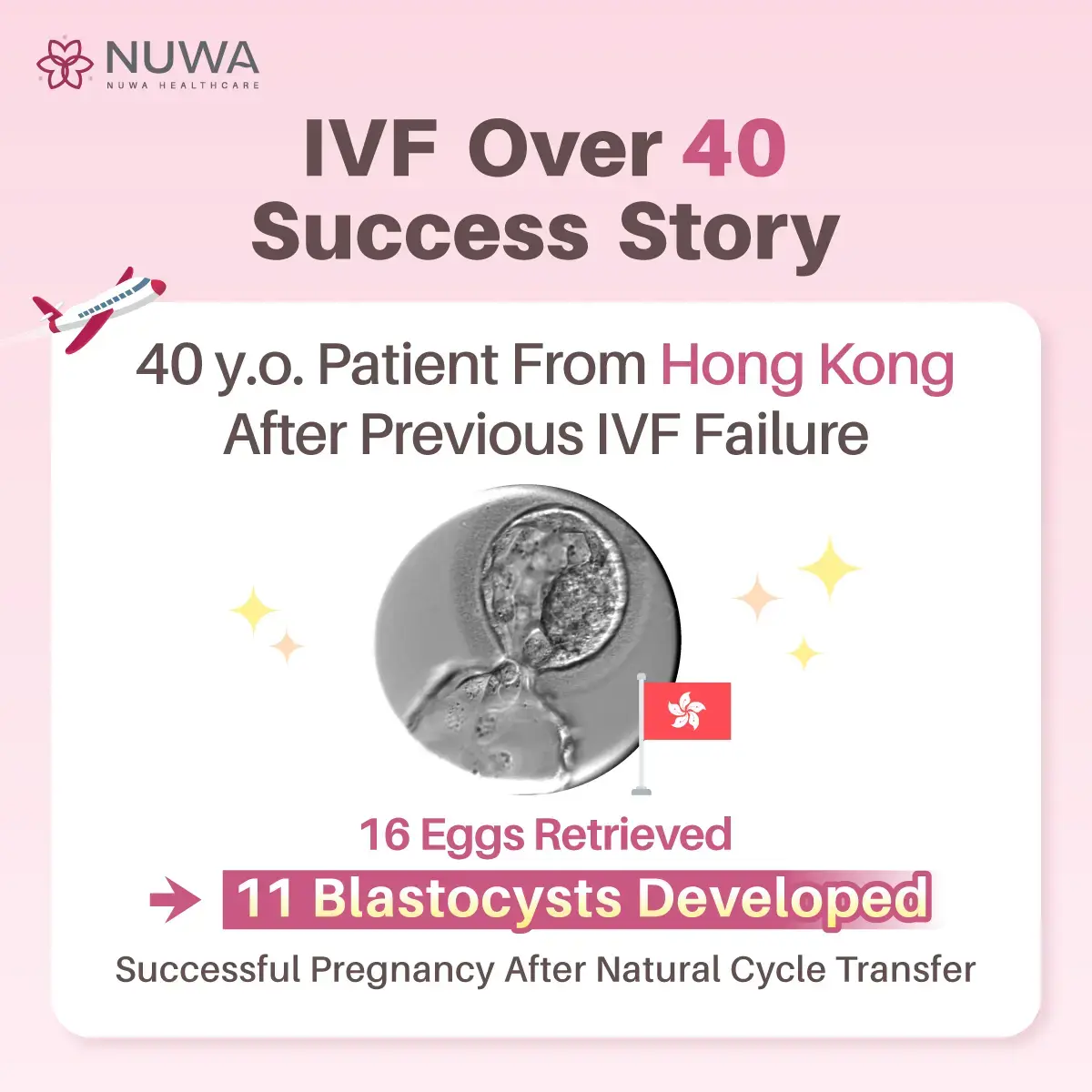
This is the story of Xiaohui, a patient from Hong Kong who experienced a failed IVF cycle before traveling to Taiwan for another attempt. After retrieving 16 eggs, developing 11 blastocysts, and undergoing PGS (PGT-A), she achieved pregnancy following a natural cycle embryo transfer.
Her journey is a reminder that even with IVF over 40, there may still be more possibilities ahead than you think.
IVF Over 40: Why This Hong Kong Couple Chose Taiwan for Another IVF Cycle
After postponing pregnancy for nearly ten years because of work, Xiaohui decided to begin IVF treatment in her 40s. Like many women pursuing IVF over 40, she understood that age could affect egg quality and embryo development.
During her first IVF cycle at a hospital in Hong Kong, six eggs were retrieved and two were fertilized. However, only one Day 3 embryo remained, and the embryo transfer did not result in pregnancy.
After learning about Taiwan's advanced fertility technology and laboratory standards, Xiaohui and her husband decided to seek treatment at NUWA Fertility Center in Taipei.
IVF Over 40 Often Benefits from Blastocyst Culture and PGS (PGT-A)
Women undergoing IVF over 40 have a higher chance of producing embryos with chromosomal abnormalities, making embryo selection especially important.
Based on her previous IVF experience, Xiaohui chose to undergo preimplantation genetic screening (PGS, now commonly referred to as PGT-A) to identify chromosomally normal embryos before transfer.
Although she felt anxious throughout embryo culture, the laboratory results far exceeded her expectations.
NUWA Laboratory Retrieved 16 Eggs and Cultivated 11 Blastocysts
Thanks to the expertise of NUWA's fertility specialists and experienced embryology laboratory team, Xiaohui achieved an outstanding outcome.
A total of 16 eggs were retrieved.
- 11 eggs were successfully fertilized.
- All 11 embryos developed into blastocysts.
- Eight blastocysts were graded BB or higher.
- All embryos successfully completed PGS (PGT-A) biopsy.
For many women considering IVF over 40, embryo quality can be just as important as the number of eggs retrieved. A high-quality embryology laboratory plays a crucial role in supporting embryo development.
Pregnancy Achieved After a Natural Cycle Frozen Embryo Transfer
Instead of a medicated transfer cycle, Xiaohui chose a natural cycle frozen embryo transfer (FET) with fewer medications.
She stayed in Taiwan during monitoring visits because she appreciated the convenient medical care, reasonable treatment costs, and personalized support provided by the NUWA team.
After returning to Hong Kong, her pregnancy test came back positive.
Today, Xiaohui is preparing to welcome her baby—a joyful milestone after years of waiting.
IVF Over 40: It's Never Too Late to Explore Your Fertility Options
Although fertility naturally declines with age, successful pregnancy is still possible for many women through individualized IVF treatment.
For women considering IVF over 40, comprehensive fertility evaluation, experienced reproductive specialists, advanced embryo culture technology, and appropriate embryo selection strategies such as PGS (PGT-A) can all contribute to improving the chance of pregnancy.
Every fertility journey is unique, and with the right medical support, many couples can move one step closer to building their family.
Continue Reading
If you're considering IVF over 40 or exploring fertility treatment in Taiwan, these articles may help you better understand your options, expected success rates, and treatment strategies.