





Academic Achievement


Search
All articles
2024 Academic Publications
2023 Academic Publications
2022 Academic Publications
2021 Academic Publications

2022 Academic Publications
New Perspectives on Embryo Chromosomal Abnormalities: Can Pronuclear Formation Timing Serve as a Predictive Marker?
Presented by NUWA Fertility at the 2022 Taiwan Society for Reproductive Medicine (TSRM)At the 2022 TSRM annual meeting, NUWA Fertility presented a study examining whether the timing of two-pronuclei (2PN) formation in early embryo development correlates with later embryo chromosomal normalcy. This research offers a new perspective on predicting chromosomal abnormalities in embryos.Background: Exploring the Link Between Early Embryo Development and Chromosomal Abnormalities
Preimplantation genetic screening (PGS) has become a powerful tool for increasing IVF success rates by identifying embryos with normal chromosomal content. One major research focus in reproductive medicine is determining whether characteristics observed during early embryonic development can predict chromosomal status.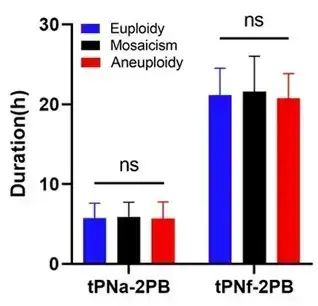 This study specifically explores whether the timing of 2PN formation—after intracytoplasmic sperm injection (ICSI)—is associated with euploid or aneuploid outcomes at the blastocyst stage.
Key Insight:
Early embryo development may not strongly correlate with chromosomal normalcy or abnormality.Methods & Results: No Significant Correlation Found Between Early Development Timing and Chromosomal Status
The research team analyzed morphokinetic parameters of embryo development to evaluate whether specific early time points could be used as predictors of chromosomal status.Overall, the data revealed no clear correlation between the timing of 2PN formation and whether the resulting blastocyst was euploid (chromosomally normal) or aneuploid (chromosomally abnormal).However, the researchers also noted that within certain age groups, morphokinetic data may still inform individualized decision-making in embryo selection.Clinical Significance: A More Comprehensive View of Embryo Potential
This study highlights the importance of not relying solely on early developmental timing to evaluate an embryo’s implantation potential.Chromosomal status is a complex and multifactorial issue influenced by various biological factors.Future research should integrate morphological assessment, time-lapse (morphokinetic) data, and genetic testing results to more accurately assess embryo viability and guide embryo selection—ultimately improving IVF outcomes.NUWA Fertility remains dedicated to advancing the understanding of the many factors that influence embryo development and chromosomal health.By applying cutting-edge research to clinical practice, we aim to deliver more precise and personalized IVF treatment strategies, helping patients achieve better outcomes on their fertility journey.2025.06.27

2022 Academic Publications
Emerging Trend in Embryo Transfer: AI CHLOE Scoring System Predicts Pregnancy Rates
Presented by NUWA Fertility at the 2022 Taiwan Society for Reproductive Medicine (TSRM) Annual MeetingAt the 2022 TSRM annual conference, NUWA Fertility presented an oral research report confirming that the AI-based CHLOE scoring system demonstrates strong potential in predicting clinical pregnancy rates following day-5 single embryo transfer (SET). This advancement brings new promise to improving the precision and objectivity of embryo selection in IVF treatment.Background: How AI Is Transforming Embryo Selection
In IVF, selecting the embryo with the highest implantation potential is critical to achieving success. Traditionally, embryo assessment relies on embryologists’ expertise and visual morphological grading. However, this method is subjective and may vary across practitioners. To improve objectivity and consistency, AI-powered embryo evaluation tools like CHLOE have been developed.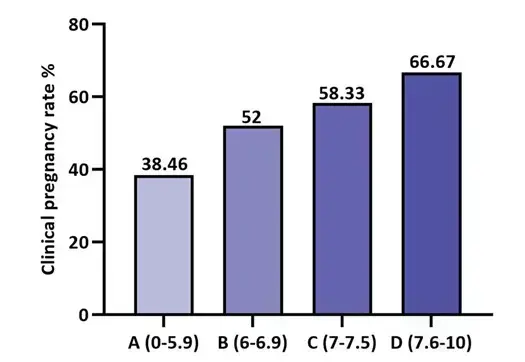 This study investigates the effectiveness of the CHLOE scoring system in predicting clinical pregnancy outcomes after day-5 single blastocyst transfer.
Methodology: Evaluating the Correlation Between CHLOE Scores and Pregnancy Rates
The research team analyzed data from 96 day-5 single blastocyst transfers. Each embryo was assigned a CHLOE score and categorized into four distinct score groups. Clinical pregnancy rates were then calculated for each group to assess the correlation between CHLOE scores and pregnancy outcomes. The study aimed to determine whether CHLOE scores could serve as a reliable predictor of success, thereby improving the consistency and efficiency of embryo selection.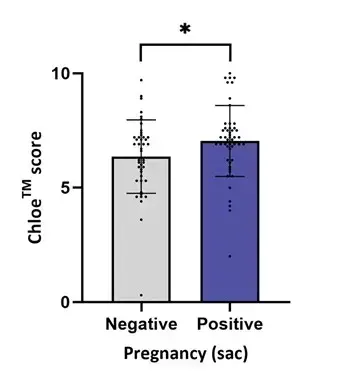
Results: Strong Positive Correlation Between CHLOE Scores and Clinical Pregnancy Rates
The study revealed a significant and strong positive correlation between CHLOE scores and clinical pregnancy rates following day-5 SET.In other words, embryos with higher CHLOE scores had a greater likelihood of leading to a successful pregnancy. This supports the clinical value of using the CHLOE system as an evidence-based reference in embryo selection.Clinical Implications: Enhancing Precision and Consistency in Embryo Selection
The study concludes that the AI-powered CHLOE scoring system is highly correlated with clinical pregnancy outcomes in day-5 single blastocyst transfers. By integrating CHLOE into clinical practice, embryologists can assess embryo viability more objectively and accurately, enhancing both the consistency and efficiency of embryo selection.This technology may ultimately contribute to higher IVF success rates and help more couples struggling with infertility achieve their family-building goals.NUWA Fertility is actively adopting cutting-edge technologies to advance embryo assessment and IVF success. The integration of the CHLOE AI scoring system represents a significant step forward in optimizing embryo selection, allowing us to deliver higher-quality, more personalized IVF care to our patients.2025.06.13