





Academic Achievement


Search
All articles
2024 Academic Publications
2023 Academic Publications
2022 Academic Publications
2021 Academic Publications

2024 Academic Publications
New Frozen Embryo Technology: Laser-Assisted Blastocyst Shrinkage to Improve Pregnancy Rates
NUWA Fertility presented the latest research at the 2024 Taiwan Society of Reproductive Medicine (TSRM), confirming that for blastocysts of certain sizes, using laser-assisted shrinkage technology before vitrification freezing can significantly enhance the pregnancy potential of subsequent thawed embryo transfers.Research Background: Why is Laser-Assisted Blastocyst Shrinkage Needed?
Vitrification freezing is an advanced technique for embryo preservation. However, during the freezing process, excessive fluid inside the blastocyst may reduce the efficiency of cryoprotectant exchange and increase the risk of ice crystal formation, which can damage embryo cells. To address this issue, this study aimed to investigate whether reducing the fluid inside the blastocyst through laser-assisted shrinkage could optimize vitrification outcomes and thereby improve subsequent pregnancy rates.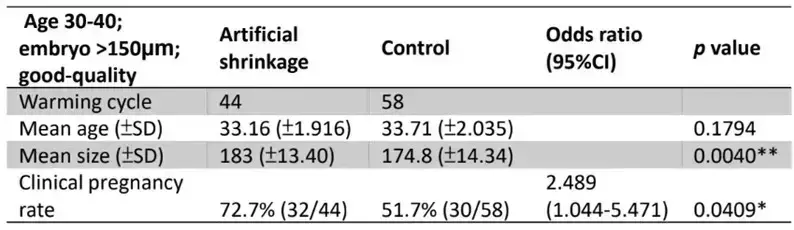
Research Method: Exploring the Effect of Laser Shrinkage on Pregnancy Rates
This study focused on blastocysts undergoing vitrification freezing, examining whether the use of laser-assisted shrinkage before freezing affects clinical pregnancy rates after thawing and transfer. The research team rigorously analyzed relevant data to evaluate the potential benefits of this new technology.Study Focus: Does Laser-Assisted Shrinkage of Blastocysts Used in Vitrification Affect Clinical Pregnancy Rates After Thawing and Transfer?Research Results: Laser Shrinkage Significantly Enhances Pregnancy Potential for Blastocysts of Certain Sizes
The results clearly showed that for embryos larger than 150 micrometers (μm), applying laser-assisted shrinkage before vitrification freezing significantly improved the freezing outcome, thereby increasing the pregnancy potential of high-quality blastocysts during thaw cycles. This finding provides important clinical guidance on more effective embryo preservation and selection.Conclusion and Clinical Significance
This study confirms that laser-assisted blastocyst shrinkage technology can optimize vitrification outcomes under certain conditions and increase the success rate of subsequent embryo implantation. The application of this new technology is expected to bring higher pregnancy chances to more couples seeking IVF treatment. NUWA Fertility will continue to monitor the latest advances in reproductive medicine research and apply promising technologies to clinical practice to provide higher-quality services to patients.2025.07.22

2024 Academic Publications
The Relationship Between Post-Thaw Blastocyst Re-Expansion and IVF Pregnancy Outcomes
Presented by NUWA Fertility at the 2024 Taiwan Society for Reproductive Medicine (TSRM)At the 2024 TSRM annual meeting, NUWA Fertility presented a study exploring the association between blastocyst re-expansion after thawing and subsequent implantation and pregnancy success. The findings provide valuable insights for refining embryo selection criteria in frozen embryo transfer (FET) cycles.Background: Does Post-Thaw Expansion Matter?
With advancements in vitrification, the success rate of frozen embryo transfers has significantly improved. However, following thawing, blastocysts undergo a period of re-expansion, which may reflect their viability.This study aimed to evaluate whether the degree of blastocyst expansion after thawing is correlated with implantation potential and overall pregnancy outcomes.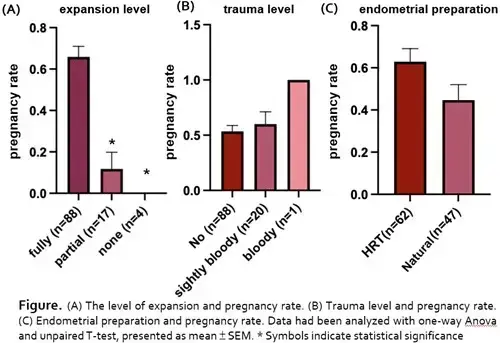 Key Finding: Fully re-expanded blastocysts had higher pregnancy rates compared to partially or non-expanded ones.
Results: Full Re-Expansion Indicates Greater Implantation Potential
The study clearly demonstrated that fully re-expanded blastocysts post-thaw showed significantly higher clinical pregnancy rates compared to those that were only partially expanded or not expanded at all.This highlights post-thaw morphological recovery as an important marker of embryo viability and implantation potential.Interestingly, the study also found that medication protocols and the presence of minor bleeding at the time of transfer had no significant impact on pregnancy rates—further reinforcing the importance of embryo quality and recovery behavior over external factors.Clinical Implications: Re-Expansion as a Key Morphological Indicator
These findings suggest that embryologists and clinicians should carefully evaluate the degree of blastocyst expansion after thawing when selecting embryos for transfer.Incomplete or delayed re-expansion may indicate underlying embryo quality issues or suboptimal vitrification processes, warranting additional caution during selection.NUWA Fertility will continue to monitor and evaluate key post-thaw indicators to improve embryo selection strategies.By focusing on morphological recovery after thawing, we aim to deliver more effective and personalized FET protocols, ultimately helping more patients achieve successful pregnancies.2025.07.18
2024 Academic Publications
Embryo Selection in IVF: Integrating AI Scoring Systems with Traditional Morphology Assessment
Presented by NUWA Fertility at the 2024 European Society of Human Reproduction and Embryology (ESHRE)At the 2024 ESHRE annual meeting, NUWA Fertility presented a study comparing AI-based embryo scoring systems (iDAScore® v2.0 and KIDScore™ D5 v3.2) with traditional morphological evaluation in the context of single euploid blastocyst transfer. The goal was to identify the most effective strategy for selecting the embryo with the highest implantation potential.Background: Optimizing Single Euploid Embryo Transfer Success
Once a chromosomally normal (euploid) embryo is identified through PGT-A (Preimplantation Genetic Testing for Aneuploidy), the next challenge is selecting the embryo with the greatest implantation potential.This study compared the predictive value of several embryo selection tools—including AI-driven scoring systems and conventional morphology grading—in order to improve the success rate of single embryo transfer (SET).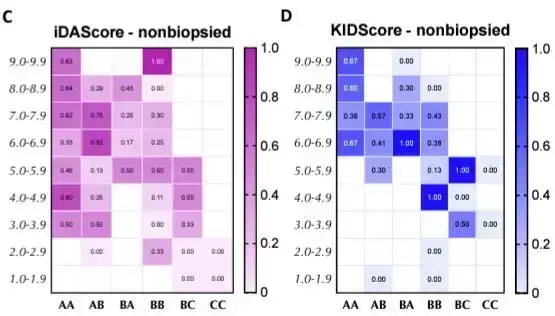 Research question: Which embryo selection tool performs best for single euploid blastocyst transfers: iDAScore® v2.0, KIDScore™ D5 v3.2, or traditional morphological grading?
Findings: The Power of Integrating AI and Morphokinetics
The study found that integrating AI scoring systems, morphokinetic data, and traditional embryology provides a viable and potentially superior strategy for embryo selection in IVF.AI scoring systems (such as iDAScore® and KIDScore™) offer objective, standardized evaluations.Morphokinetic data provide insights into early embryo development dynamics. Embryologist expertise adds a layer of clinical context and judgment. Combining these tools may lead to more comprehensive assessments of implantation potential, ultimately improving the success of single euploid embryo transfers.Clinical Implications: Advancing Toward Precision Embryo Selection
This research supports a new direction in embryo selection:By integrating AI tools, time-lapse developmental data, and traditional morphological assessment, IVF clinics can enhance consistency, objectivity, and efficiency in embryo selection.NUWA Fertility remains committed to applying the latest technologies in embryology, offering patients more precise and personalized IVF treatment strategies to improve their chances of success.2025.07.16
2024 Academic Publications
Enhancing Pregnancy Rates After PGS: The Importance of Time Between Trophectoderm Biopsy and Embryo Freezing
Presented by NUWA Fertility at the 2024 Taiwan Society for Reproductive Medicine (TSRM)At the 2024 TSRM annual meeting, NUWA Fertility presented a study investigating whether the interval between trophectoderm biopsy and vitrification influences pregnancy outcomes for high-quality blastocysts (graded BB or above) that have undergone preimplantation genetic screening (PGS).Background: Timing Considerations in Post-PGS Embryo Freezing
Preimplantation Genetic Screening (PGS) is a powerful tool for selecting chromosomally normal embryos, which improves IVF success rates.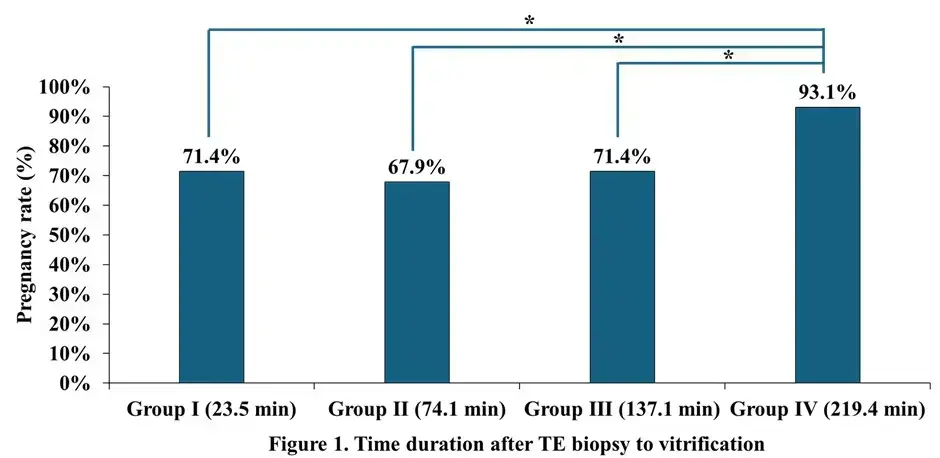 During PGS, a trophectoderm biopsy is performed on the blastocyst. This study aimed to explore whether allowing the embryo to recover in culture for a few hours after biopsy, prior to freezing, might yield better pregnancy outcomes compared to immediate vitrification.
Key Finding: Delaying Freezing for 3+ Hours May Improve Pregnancy Rates
This retrospective study analyzed single euploid embryo transfers using PGS-normal embryos graded BB or above.Preliminary results suggest that freezing the embryo more than 3 hours after biopsy may be associated with a higher pregnancy rate compared to embryos that were frozen immediately following biopsy.This finding implies that a brief post-biopsy culture period may allow the embryo time to stabilize or recover, potentially improving post-thaw implantation potential.However, the research team emphasized that larger-scale studies are needed to confirm this trend due to current sample size limitations.Clinical Significance: A Potential Step Toward Optimizing Post-PGS Embryo Handling
These preliminary findings highlight a potential direction for optimizing lab protocols following PGS.If future research confirms the benefits of extending culture time after biopsy, clinics may develop refined embryo handling workflows to further improve implantation and pregnancy success after PGS-based frozen embryo transfer.NUWA Fertility continues to advance research in embryology and IVF optimization.By translating the latest findings into clinical practice, we aim to offer patients higher-quality care and better outcomes throughout their fertility journey.2025.07.11
2024 Academic Publications
Improving Frozen Embryo Transfer Outcomes: A Comparative Study on Endometrial Preparation Protocols and Their Impact on Pregnancy and Neonatal Outcomes
Presented by NUWA Fertility at the 2024 Taiwan Society for Reproductive Medicine (TSRM)At the 2024 TSRM annual meeting, NUWA Fertility presented a retrospective study comparing pregnancy and neonatal outcomes following frozen embryo transfers (FET) of euploid embryos, using different endometrial preparation protocols.This research offers valuable clinical insight into selecting the most appropriate preparation method for individual patients undergoing FET.Background: Choosing the Right Endometrial Preparation Method
In FET cycles, proper endometrial preparation is critical to successful implantation. Common clinical approaches include:- Hormone Replacement Therapy (HRT)
- True Natural Cycle (tNC)
- Modified Natural Cycle (mNC)
This study aimed to assess whether these different protocols affect pregnancy rates, live birth rates, and neonatal health outcomes when transferring embryos confirmed as chromosomally normal via preimplantation genetic testing.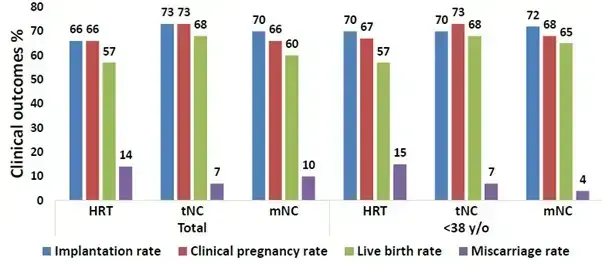
Study Results: Performance Trends Across Protocols
The study analyzed data from 366 patients treated between April 2021 and June 2023:- HRT group (n = 165)
- tNC group (n = 82)
- mNC group (n = 119)
Primary Outcomes:- Outcome HRT tNC mNC
- Implantation Rate 66% 73% 70%
- Clinical Pregnancy Rate 66% 73% 66%
- Live Birth Rate 57% 68% 60%
- Miscarriage Rate 14% 7% 10%
While the three groups showed no statistically significant differences in implantation or clinical pregnancy rates, a notable trend was observed:The tNC group had the highest live birth rate (68%) and lowest miscarriage rate (7%), suggesting potential advantages—especially in younger patients with regular ovulatory cycles.Neonatal Outcomes: No Significant Differences Among Protocols
The study also evaluated neonatal outcomes, including birth weight and overall newborn health.Results indicated no significant differences between groups, suggesting that the choice of endometrial preparation protocol does not adversely impact neonatal health.Conclusion & Clinical Implications: Toward More Personalized Care
This study concludes that while overall differences in clinical outcomes among the protocols were minimal, the true natural cycle (tNC) protocol showed favorable trends in live birth and miscarriage rates. These trends were more pronounced in younger patients with normal ovulation.The findings support a personalized medicine approach, offering clinicians evidence-based guidance when selecting an endometrial preparation strategy—taking into account age, ovulatory function, and patient preferences to optimize outcomes.At NUWA Fertility, we continue to monitor the latest research and apply evidence-based practices to tailor endometrial preparation protocols to each patient’s unique physiology and goals.Through precision medicine and compassionate care, our aim is to maximize the success of frozen embryo transfers and help more families realize their dreams of parenthood.2025.07.08